5 Essential Maintenance Practices for Direct-to-Chip Cooling Systems
By Brenda Pak
Artificial intelligence is not just scaling data centers. It is redefining their physical limits.
As rack power densities move beyond 50 kW and approach 100 kW and higher, the limiting factor is no longer compute. It is heat.
At these densities, traditional air cooling architectures reach their practical limits. The physics of air as a heat transfer medium cannot keep pace with the thermal output of modern processors.
Direct-to-chip (D2C) liquid cooling resolves this constraint by removing heat at the source. By circulating coolant directly through micro-channel cold plates attached to high-performance silicon, these systems enable sustained operation at densities that air cooling cannot support.
However, this shift introduces a new operational reality:
In liquid-cooled environments, failures are rarely sudden. Performance is lost gradually, through small, compounding inefficiencies that often go unnoticed until they become expensive.
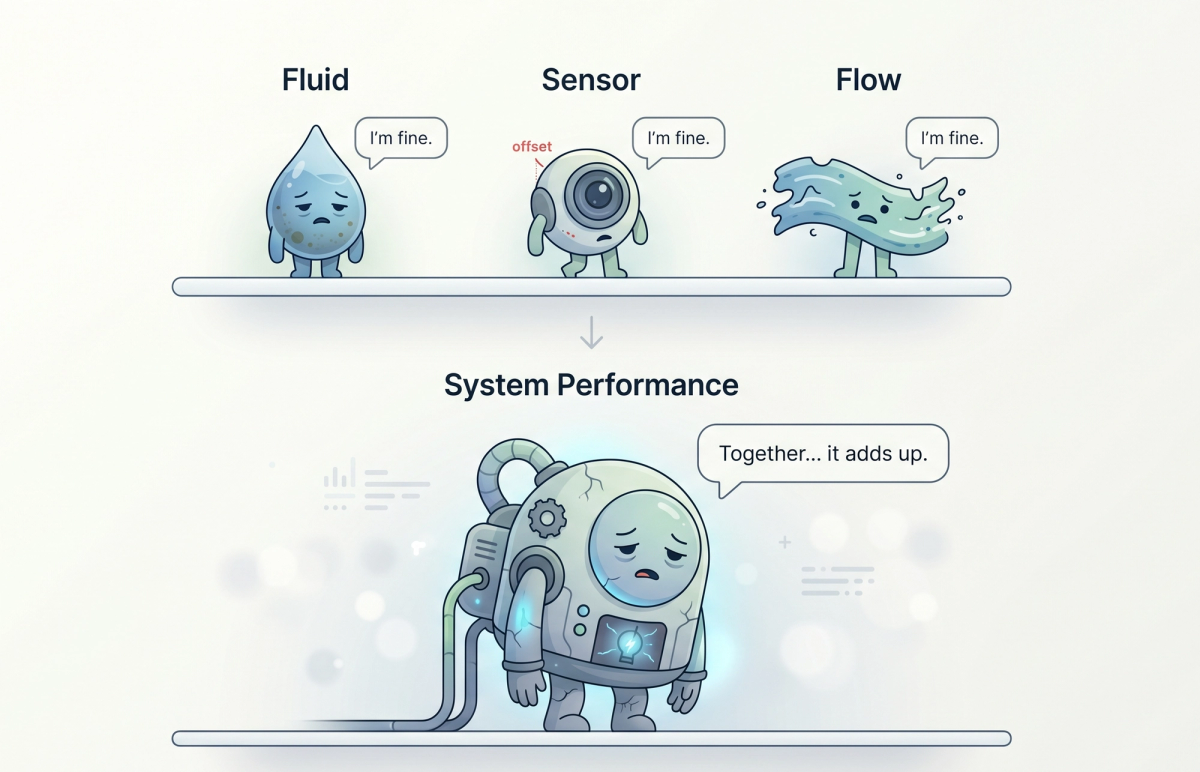
Maintaining performance at scale requires disciplined execution across three core areas: preventive maintenance, sensor calibration, and cleaning protocols.
1. Preventive Maintenance Through Baseline Monitoring
In D2C systems, reliability begins with establishing a clear definition of normal.
Baseline measurements, including pressure differential, flow rate, and pump performance, form the foundation of all operational insight. Without them, degradation cannot be detected early.
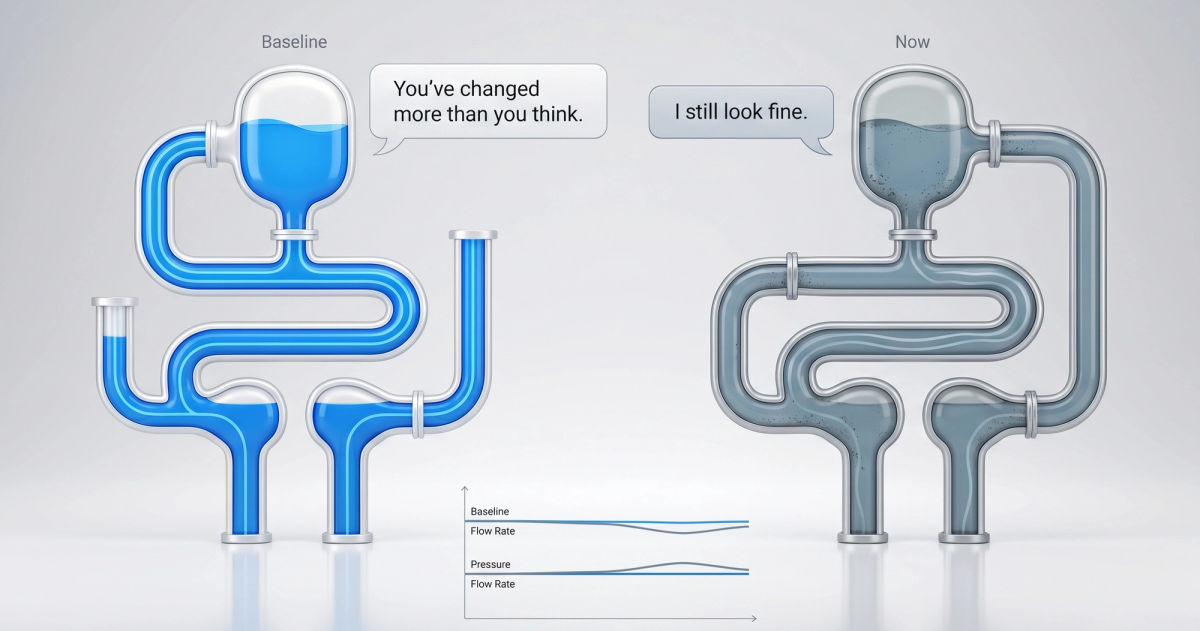
In practice, system decline rarely appears as a step change. It presents as drift:
- A gradual increase in pressure drop across the loop
- A slow reduction in flow rate at the rack level
- Increasing pump utilization to maintain target performance
Pressure differentials tend to increase over time as flow restrictions develop within the loop, often without triggering immediate alarms.
What is not measured early becomes expensive later.
A structured preventive maintenance approach should therefore include:
- Continuous telemetry monitoring
- Trend-based analysis rather than threshold-based reactions
- Scheduled inspection of pumps, valves, and control components
Early intervention at this stage prevents efficiency loss from propagating across the system.
2. Cleaning Protocols and Fluid Quality Management
Fluid condition directly determines system efficiency.
Unlike air-cooled environments, where contamination has a limited impact on thermal transfer, liquid cooling systems are highly sensitive to internal conditions. Even minor changes in fluid quality can significantly affect flow behavior and heat exchange, inviting what we can visualize as "Friction Monsters"—the microscopic forces of scaling, biofilm, and particulate shedding that actively fight against fluid movement.
Key degradation mechanisms include:
- Particulate accumulation increasing internal resistance
- Biofilm formation reducing thermal conductivity
- Chemical imbalance accelerating corrosion and material wear
Even minor contamination increases hydraulic resistance and reduces heat transfer efficiency over time. As these internal walls coat, they create drag, forcing pumps to operate at much higher loads just to maintain baseline flow.
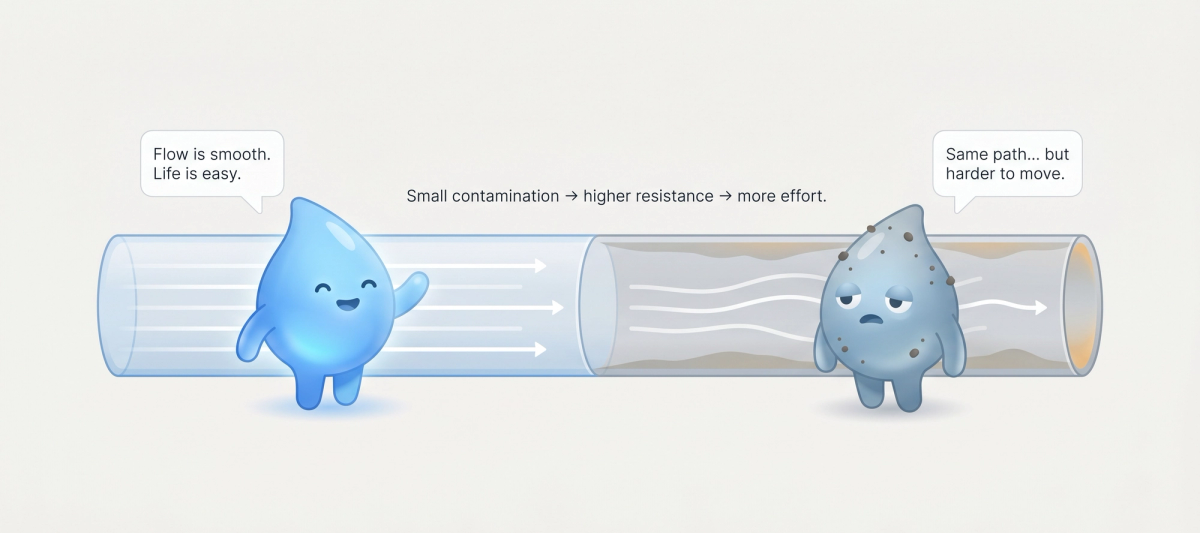
Clean systems operate efficiently. Contaminated systems compensate until they fail.
To prevent this, cleaning protocols must be enforced with consistency:
- Routine testing of fluid chemistry, including pH, conductivity, and inhibitor levels
- Regular inspection and replacement of filtration systems
- Full-system flushing during fluid replacement or hardware changes
- Strict control over fluid compatibility and additive use
Without these controls, degradation is not immediate, but it is inevitable.
3. Sensor Calibration and Data Integrity
D2C cooling systems operate on feedback. Every control decision, including flow adjustment, temperature regulation, and system response, is driven by sensor data.
Over time, all sensors drift.
The impact of this drift is often underestimated. Even small inaccuracies can introduce systemic inefficiencies:
- Small deviations in temperature measurement can result in persistent overcooling
- Misreported pressure values can mask developing restrictions
- Inaccurate flow readings can delay detection of localized failures
Small deviations in temperature and flow measurement can lead to inefficient cooling control and increased energy consumption.
If the data is wrong, the system is wrong.
Maintaining sensor accuracy requires:
- Scheduled calibration of temperature, pressure, and flow sensors
- Cross-validation between redundant measurement points
- Routine testing of alarms and automated control responses
Accurate data is not a support function. It is a control requirement.
4. Cold Plate Integrity and Micro-Channel Maintenance
Micro-channel cold plates are the most critical and most sensitive components in a D2C system.
Their internal geometries are engineered for maximum heat transfer efficiency, often using channels less than one millimeter in width, which is the equivalent of the thickness of a standard credit card. This precision enables performance, but it also introduces vulnerability.
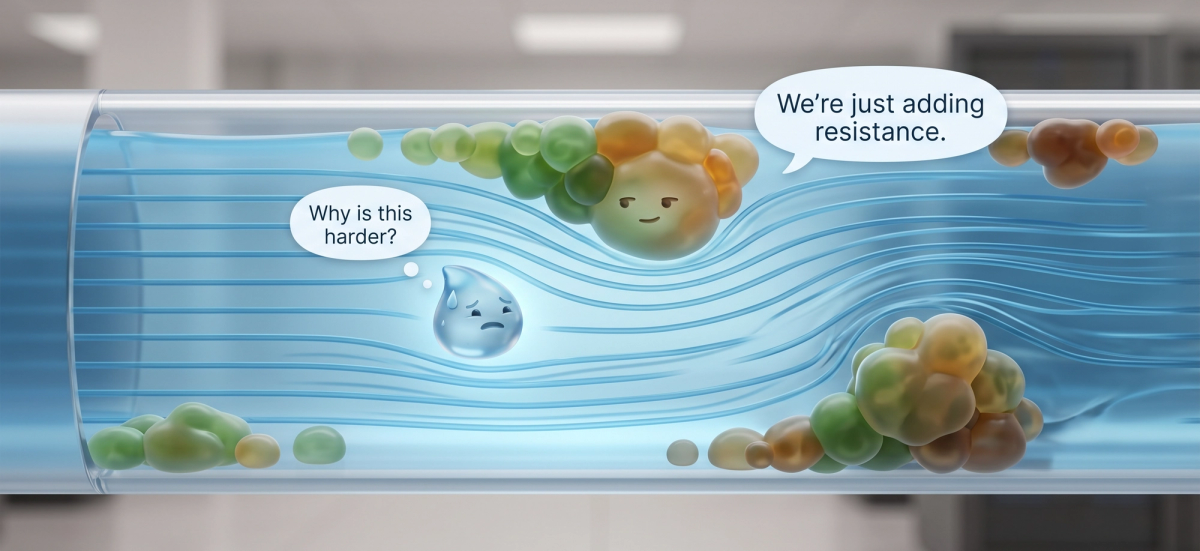
Even minor contamination can restrict flow within these channels. Unlike system-level fouling, cold plate degradation is often localized, affecting individual processors without immediately impacting overall system metrics.
Observed effects include:
- Increasing the temperature differential between the coolant and the chip
- Reduced flow rates at specific nodes
- Non-uniform thermal distribution across processors
Local problems do not stay local in high-density systems.
Preventive maintenance and cleaning protocols must therefore extend beyond the loop level to include component-level performance monitoring.
5. Leak Detection and System Integrity Assurance
While modern D2C systems incorporate robust safeguards such as sealed loops, dripless quick-disconnects, and controlled pressure systems, leak risk remains a critical operational concern.
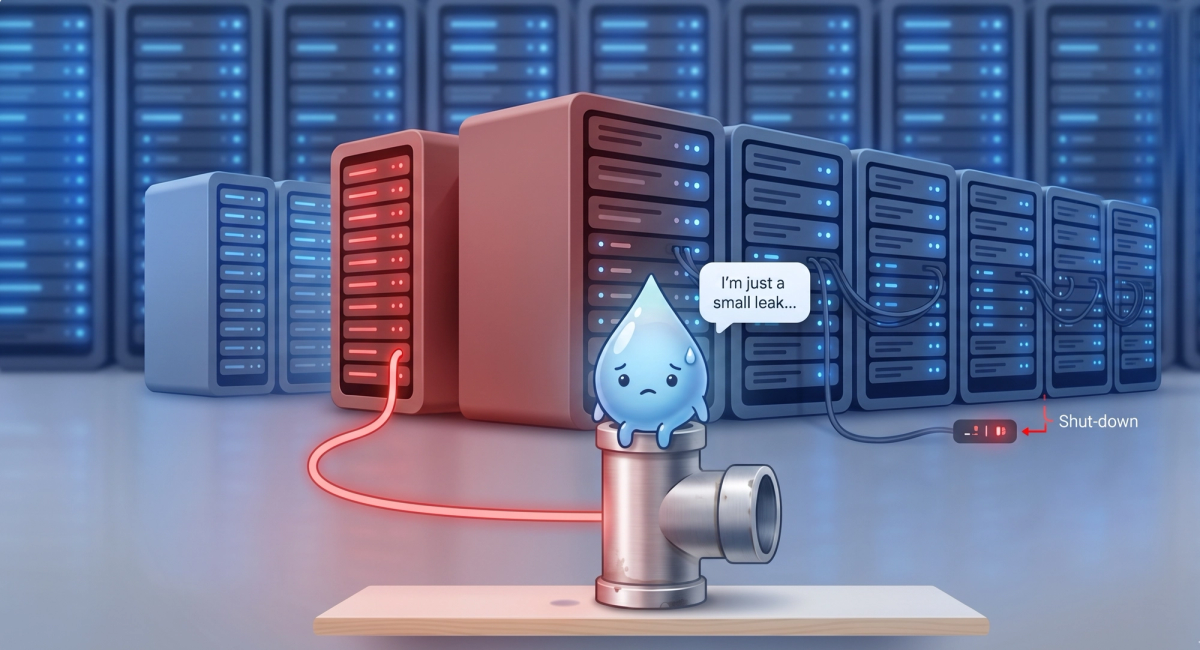
The impact of even minor leaks is disproportionate:
- Hardware exposure to fluid
- Immediate system shutdowns
- Escalating downtime costs
Industry analyses show that many data center outages exceed $100,000 in cost, with severe incidents surpassing $1 million. For example, a 2016 data center power failure cost Delta Airlines an estimated $150 million, while more recently in 2022, a severe heatwave caused catastrophic cooling system failures at major cloud data centers in London, forcing emergency shutdowns of high-density infrastructure to prevent permanent thermal damage.
To mitigate this risk, leak detection and response must be treated as an active discipline:
- Routine inspection of connectors, seals, and fittings
- Regular validation of leak detection systems and alarms
- Integration with building management systems (BMS)
- Defined and practiced emergency response procedures
In these scenarios, system design reduces probability, but operational readiness determines outcome.
The Bottom Line
Direct-to-chip liquid cooling enables the performance required for modern AI infrastructure, but it also raises the standard for how that infrastructure is operated.
At scale, efficiency is not lost through failure. It is lost through accumulation:
- Slightly degraded fluid
- Slightly inaccurate sensors
- Slightly restricted flow
Individually, these effects are manageable. Collectively, they define system performance. Sustained reliability depends on disciplined execution of three core practices:
- Preventive maintenance to detect early-stage degradation
- Cleaning protocols to preserve fluid and system integrity
- Sensor calibration to ensure accurate and actionable data
In liquid-cooled environments, inefficiency does not announce itself; it accumulates. And at scale, that accumulation is the difference between stable performance and avoidable risk.
Subscribe to updates
Get the latest engineering perspectives sent straight to your inbox.
References
- ASHRAE TC 9.9 Datacom Encyclopedia
- Open Compute Project (OCP) Liquid Cooling Cold Plate Requirements
- Uptime Institute Annual Outage Analysis 2024
- Schneider Electric White Paper 133: Navigating Liquid Cooling Architectures
- NVIDIA HGX Platform Documentation Hub
- The Green Grid (TGG) Library & Tools
- Intel Resource & Design Center (Platform Design Guides)
- Google & Oracle Cloud Cooling Failure Analysis: July 2022 UK Heatwave (via SiliconAngle)