Liquid cooling is now part of compute reliability. CDU behavior, coolant condition, flow, pressure, and cold plates all shape thermal margin.
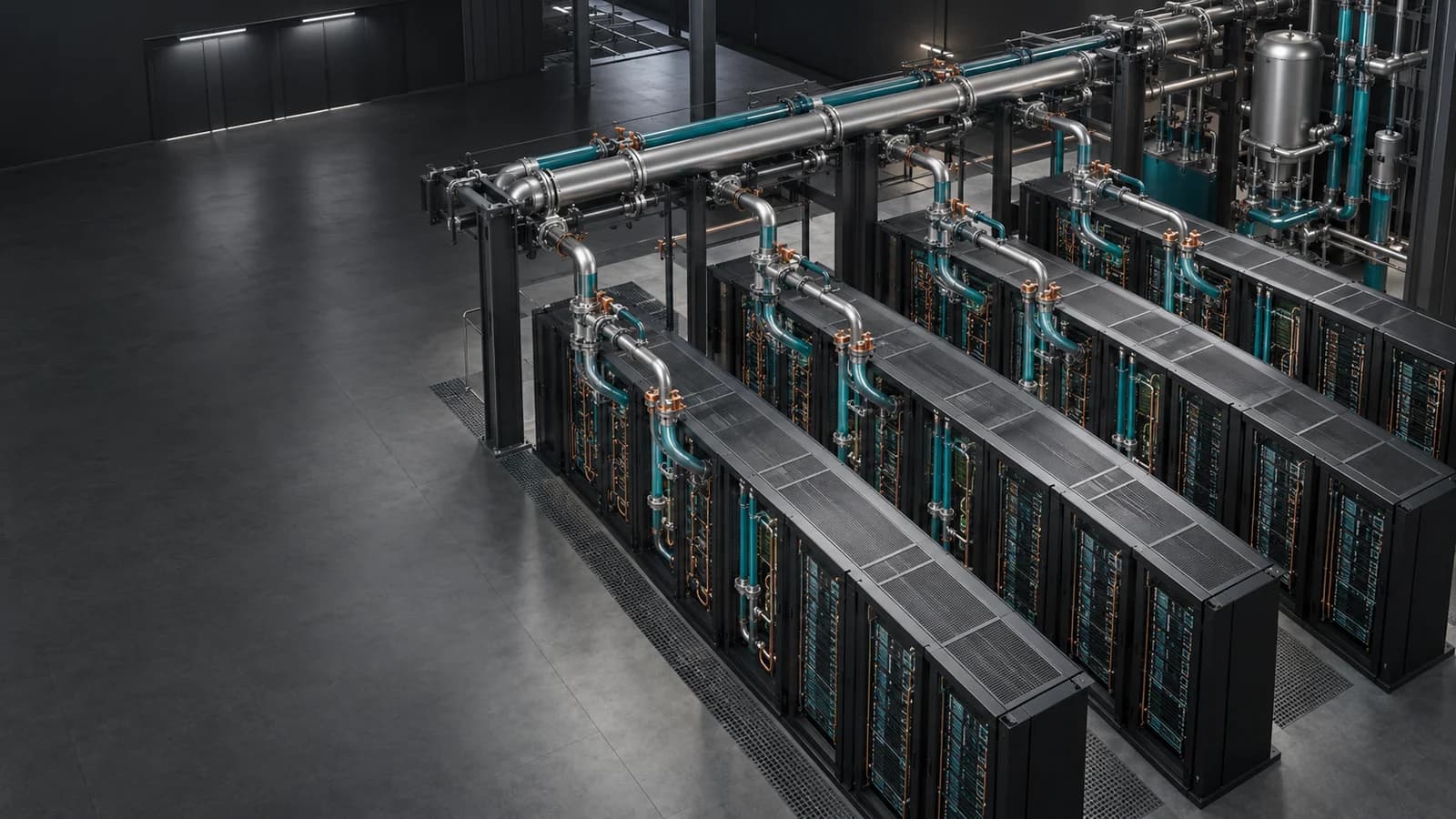
Data Center Liquid Cooling
Data center liquid cooling
Data Center Liquid Cooling Reliability for AI Infrastructure
Data center liquid cooling reliability depends on the full loop: CDUs, manifolds, filters, pumps, hoses, cold plates, coolant chemistry, controls, and the GPU workloads creating heat.
Reliability Engine helps operators compare live loop behavior against a trusted baseline so coolant, flow, pressure, and thermal drift can be addressed before uptime or useful GPU output is affected.
Coolant condition, pressure, flow, filter loading, cold-plate response, and workload context need to be read together.
The useful output is a clear read on what changed, why it matters, and where the team should look first.
Explore the signal flow
Data center liquid coolingFull-loop view
Heat sourceGPU rack heatDense compute loads the loop.
Fluid signalCoolant healthChemistry moves early.
Reliability EngineReads the full loopCDU, flow, pressure, thermal response, and service history.
Operator viewWhere to look firstInspect, sample, rebalance, clean, or protect output.
CDU + pumpsCold platesPressure + flowEarly action
Rack heatLoop hardwareEarly action
How Reliability Engine works
From cooling measurements to maintenance decisions.
Monitor the loop
Track coolant health, temperature, pressure and flow.
Compare with GPU load
Read loop changes alongside rack and GPU signals.
Check likely causes
Look for coolant changes, restrictions or workload effects.
Choose the next check
Prioritize sampling, inspection or maintenance.
What this helps you see
CDUs and pumps
Watch whether the systems moving coolant are still operating within the expected hydraulic signature.
Manifolds and branches
Find imbalance, restriction, and pressure movement before one path becomes the weak point.
Cold plates and heat transfer
Compare thermal response against real workload and clean baseline behavior.
Coolant health
Use chemistry, particles, turbidity, and inhibitor health as early reliability signals.
Signals to read togetherView table
| Signal | What it reveals | Risk | Operator move |
|---|---|---|---|
| Coolant conductivity | Contamination, inhibitor depletion, or chemistry movement. | Corrosion, deposits, or electrical risk. | Compare against baseline and trigger chemistry review. |
| Pressure drop | Restriction across filters, manifolds, branches, or cold plates. | Uneven flow and lost thermal margin. | Inspect filters, branch balance, and affected loop paths. |
| Temperature delta | Heat transfer quality under real GPU workload. | Throttling, unstable boost, or hidden fouling. | Correlate with workload, flow, and coolant condition. |
| Flow variance | Pump, valve, branch, or manifold instability. | Uneven cooling across racks or trays. | Prioritize the loop or branch with abnormal movement. |
Coolant conductivity
- What it reveals
- Contamination, inhibitor depletion, or chemistry movement.
- Risk
- Corrosion, deposits, or electrical risk.
- Operator move
- Compare against baseline and trigger chemistry review.
Pressure drop
- What it reveals
- Restriction across filters, manifolds, branches, or cold plates.
- Risk
- Uneven flow and lost thermal margin.
- Operator move
- Inspect filters, branch balance, and affected loop paths.
Temperature delta
- What it reveals
- Heat transfer quality under real GPU workload.
- Risk
- Throttling, unstable boost, or hidden fouling.
- Operator move
- Correlate with workload, flow, and coolant condition.
Flow variance
- What it reveals
- Pump, valve, branch, or manifold instability.
- Risk
- Uneven cooling across racks or trays.
- Operator move
- Prioritize the loop or branch with abnormal movement.
From the library
Engineering guides
Liquid Cooling Design and Specification for MEP Engineers
Specify data-center liquid cooling with clear FWS and TCS boundaries, coolant requirements, hydraulic checks, monitoring provisions and acceptance criteria.
Read guideLiquid Cooling Commissioning and Clean Loop ReadinessCommission liquid cooling with staged clean-loop acceptance, approved flushing methods, fluid verification, performance tests and an evidence-based handover.
Read guideLiquid Cooling Responsibilities for Colocation ProvidersDefine liquid cooling responsibilities across colocation providers, GPU tenants and service partners, with circuit boundaries, RACI and incident handover.
Read guideCommon questions
What makes data center liquid cooling reliability hard?
Reliability depends on the full loop, not only the GPU cold plate. CDUs, pumps, filters, manifolds, hoses, coolant chemistry, pressure, flow, and controls all influence whether thermal margin stays healthy.
Which signals matter most in liquid-cooled AI data centers?
Coolant condition, particles, inhibitor health, flow behavior, pressure drift, filter loading, thermal drift, and workload context all matter because they help separate normal load movement from real cooling risk.
What changes before a cooling failure?
Before an obvious alarm, the loop often shows smaller movement in coolant, pressure, flow, filtration, or thermal response. Comparing that movement with a clean baseline gives teams time to inspect, sample, clean, rebalance, or protect workload output.