Protecting the Silicon: How Direct-to-Chip Cooling Maximizes AI Compute Density
By Gaurav Dhir
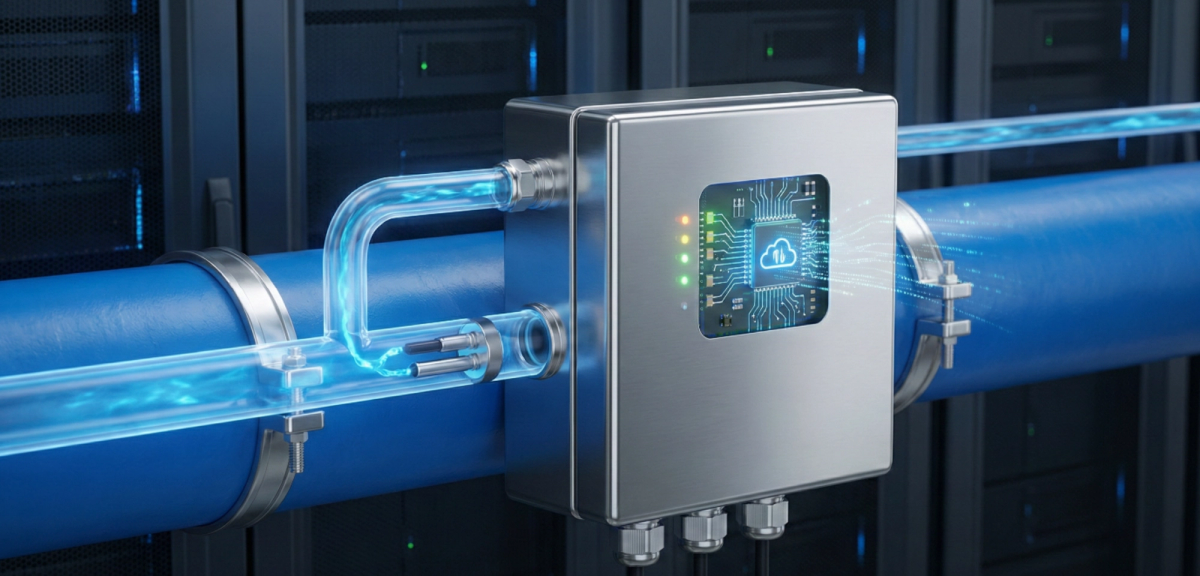
Historically, the data center industry has relied on air cooling to maintain optimal operating temperatures. Facilities teams built complex architectures around heating, ventilation, and air conditioning (HVAC) systems, using hot and cold aisles to manage thermal outputs.
However, as artificial intelligence (AI) workloads scale and compute components reach their physical thermal limits, traditional air cooling is no longer sufficient. Air cooling becomes highly impractical as rack power densities approach 50 kW, as it lacks the thermal transfer efficiency needed to prevent hardware degradation.
As rack power densities exceed 100 kilowatts (kW), air cooling lacks the necessary thermal transfer capacity. These extreme thermal loads are characteristic of advanced silicon architectures, such as NVIDIA's Hopper, Blackwell, and Rubin. Direct-to-chip liquid cooling provides a significantly greater heat-carrying capacity, making it a structural requirement for advanced compute environments.
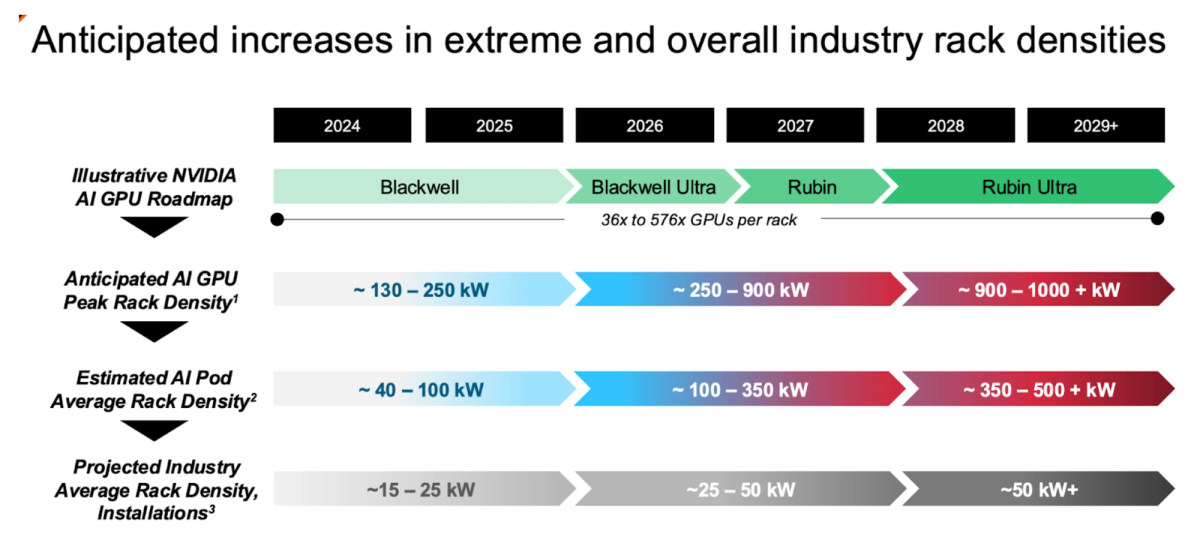
The industry is transitioning to direct-to-chip liquid cooling. This transition requires a fundamental shift in infrastructure management.
Moving from air to liquid cooling requires data center operators to expand their focus from mechanical engineering to fluid chemistry. When liquid is placed in direct contact with high-value infrastructure, the chemical composition of that fluid becomes a critical dependency for system reliability.
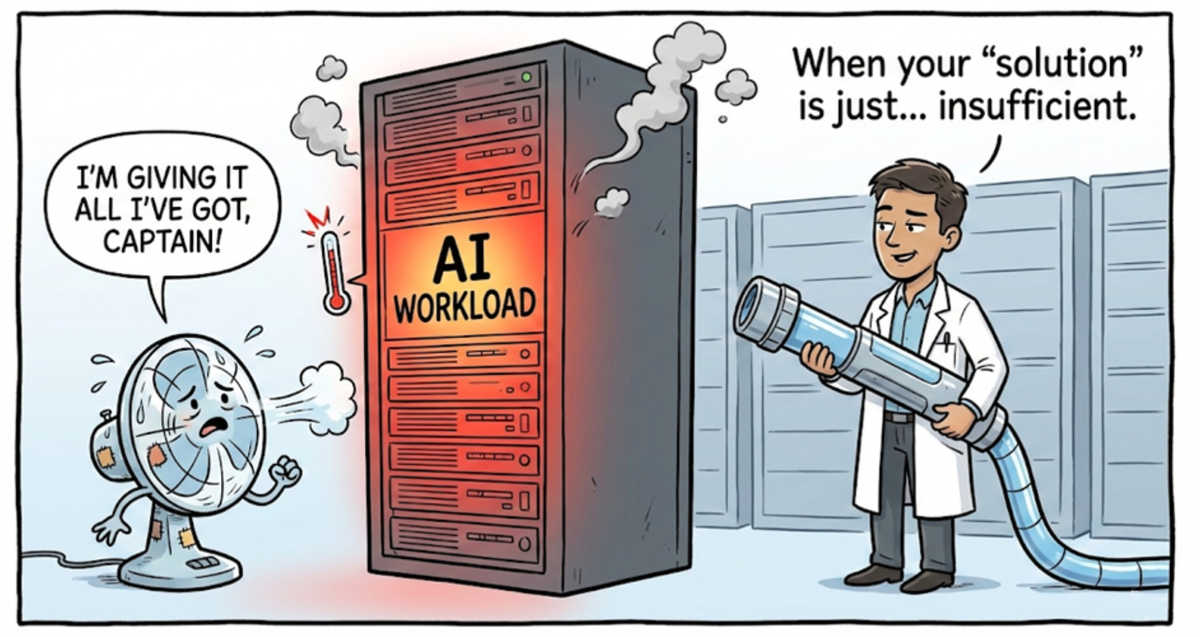
The consensus among infrastructure architects is clear: building a data center today without liquid cooling capabilities guarantees premature obsolescence.
To ensure long-term viability, operators must actively manage the three mandated requirements of fluid health: preventing galvanic corrosion, stopping biofilm proliferation, and avoiding micro-clogging according to the ASHRAE TC 9.9 and OCP standards.
The industry mandate for liquid cooling
Currently, projections for liquid cooling indicate that the global direct-to-chip liquid cooling market will grow from USD 2.2 billion in 2025 to USD 14.4 billion by 2035, expanding at a compound annual growth rate (CAGR) of 20.5%.
The United States heavily dominates this demand, having already captured a 78.4% share of the direct-to-chip market. Given this trajectory, the US will be the primary builder of these next-generation facilities.
This rapid adoption requires facilities teams to safely route large volumes of water and glycol through cooling distribution units (CDUs) and microscopic hardware channels. Major technology providers and hyperscalers acknowledge that liquid cooling is now an operational necessity.
Leaders across the sector recognize this architectural shift. Infrastructure experts note that as rack densities continue to compress compute loads, air cooling violates the physics of heat dissipation at scale. Hyperscalers like Google and Microsoft are already operating gigawatt-scale, liquid-cooled clusters to support their custom silicon and AI services.
For instance, Microsoft is building "Fairwater," an AI data center in Mount Pleasant, Wisconsin, expected to feature over 337 megawatts (MW) of capacity to house hundreds of thousands of advanced GPUs.
Similarly, Google's expanding Council Bluffs, Iowa, data center campus draws 407 MW of power to support its operations. Microsoft recently noted that organizations relying solely on traditional cooling methods will soon be unable to support next-generation processors.
Chemical Failures in Direct-to-Chip Cooling: Risks You Can't Ignore
In a direct-to-chip liquid cooling system, the fluid is essential to operation. If its chemical composition degrades, the system is at risk of localized thermal events or hardware failure. The industry currently recognizes three primary risks associated with poor liquid health.
Galvanic corrosion and conductivity spikes
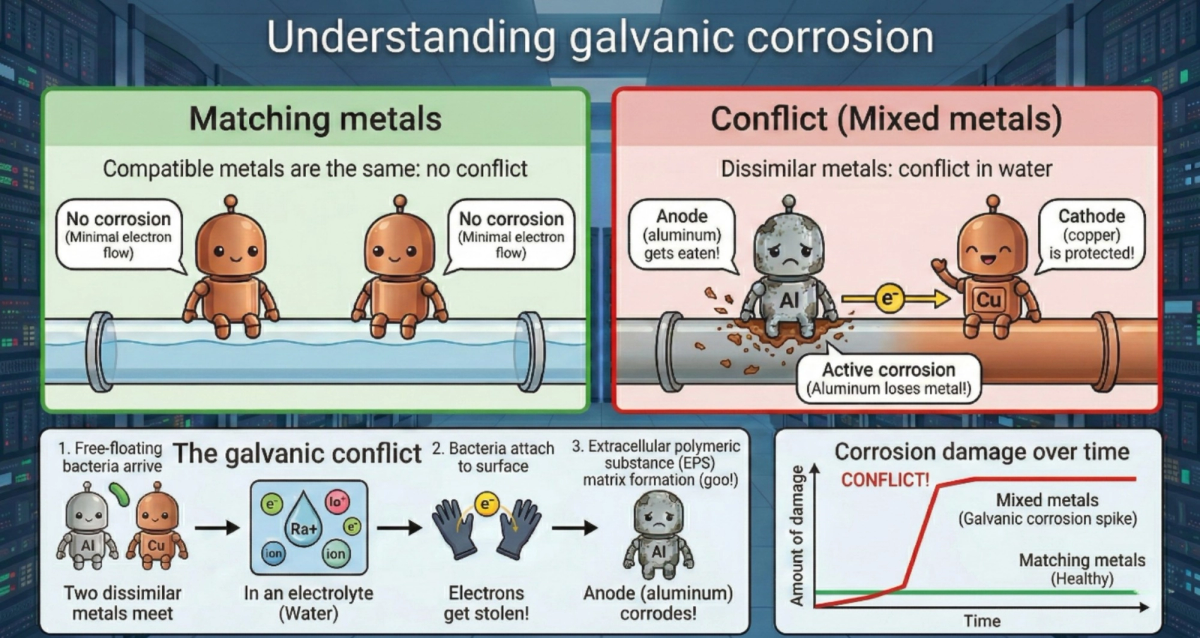
Combining fluid and electrical components introduces significant operational risk. When mixed metals, such as aluminum fittings and copper plates, interact within the same cooling loop, they can create a galvanic response that leads to rapid corrosion.
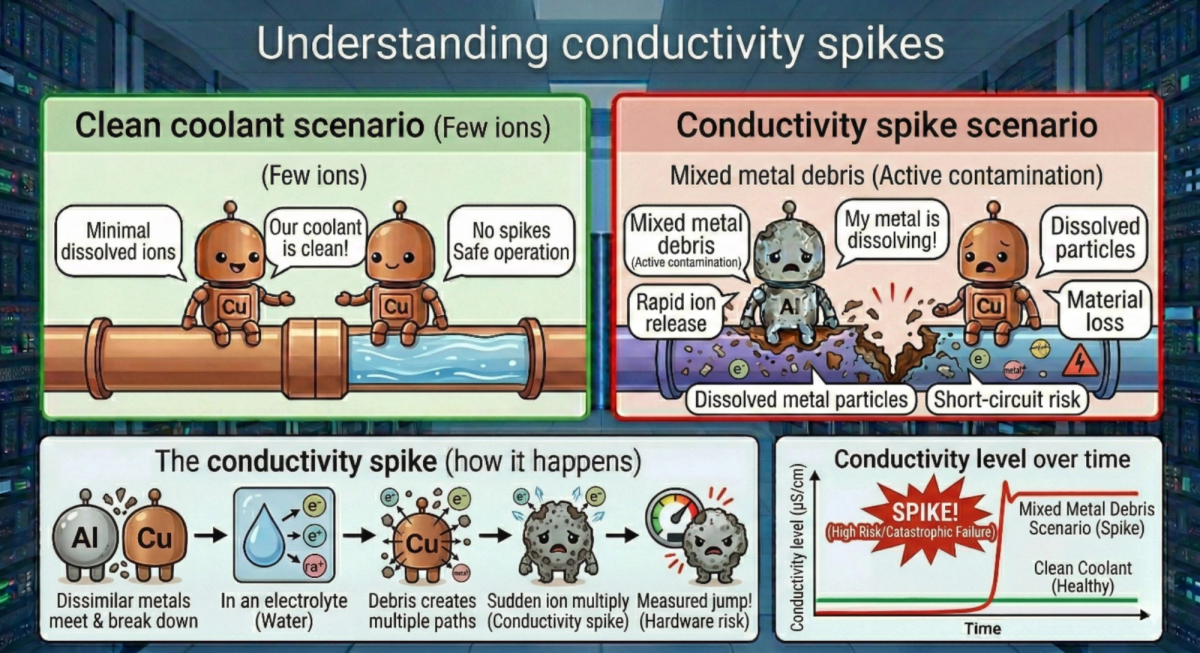
Additionally, mechanical wear can introduce contaminants into the fluid. For example, a CDU pump might leak microscopic amounts of gear oil into the water loop. This contamination increases the fluid's electrical conductivity, creating a risk of hardware short-circuiting.
Biofilm proliferation
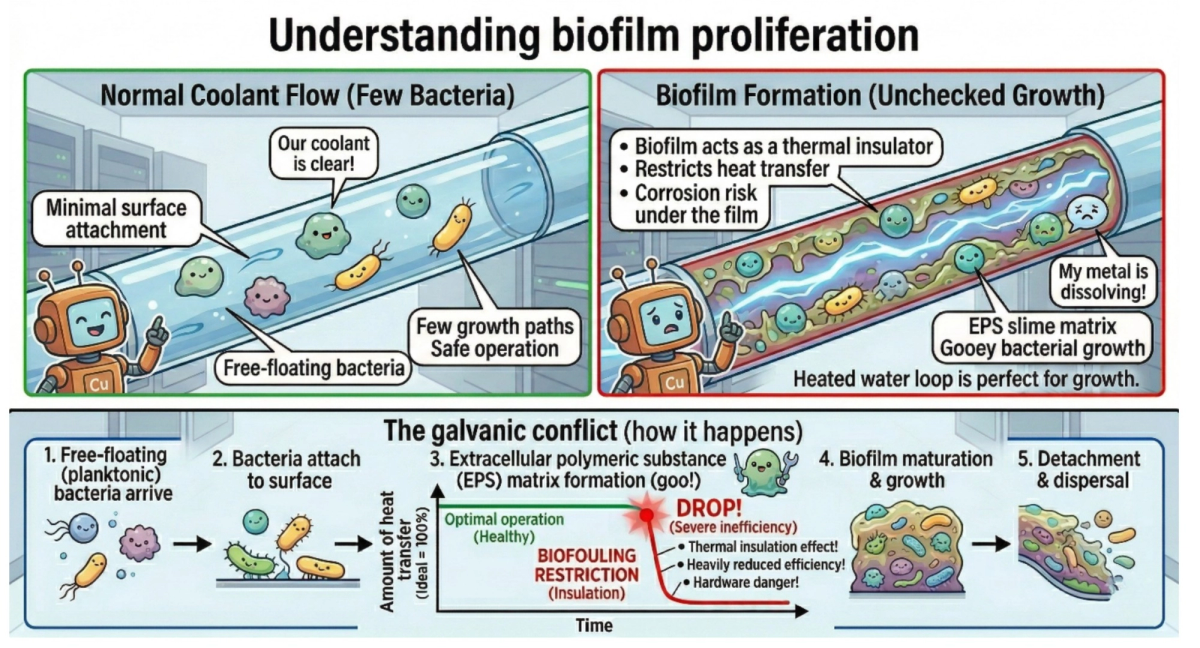
Heated water in closed loops creates an environment conducive to biological growth, including bacteria and algae. Over time, these organisms attach to the interior walls of pipes and form biofilms. Biofilms act as thermal insulators.
As they accumulate, they reduce the heat transfer efficiency of the entire loop, minimizing the thermal benefits of the liquid-cooled architecture. For perspective, a single cooling loop managing an NVIDIA GB200 NVL72 rack holds 72 Blackwell GPUs and 36 Grace CPUs.
A localized biofilm failure in just one of these loops risks destroying up to $3 million in high-density hardware alone. Furthermore, when factoring in the massive cost of AI server downtime and lost compute productivity, which industry analysts estimate at over $300,000 per hour, a single 24-hour localized failure can easily cascade into a $10.2 million financial catastrophe.
Micro-clogging in cold plates
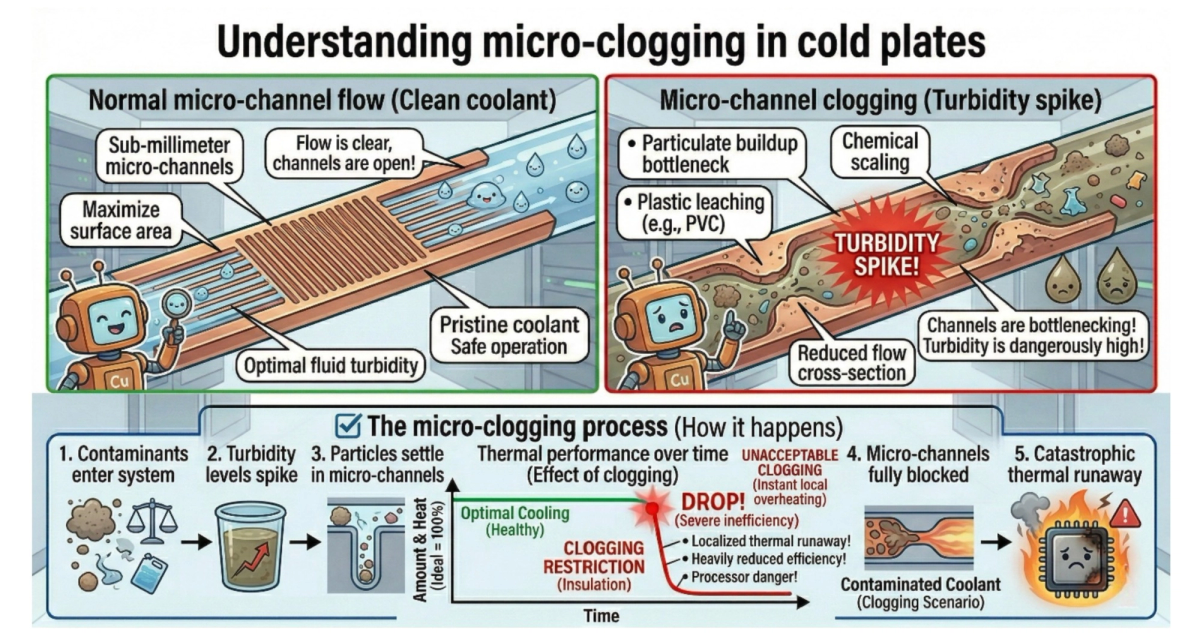
The cold plates mounted directly on modern AI processors feature micro-channels designed to maximize the surface area for heat transfer. These channels are often less than 1 millimeter wide.
Minor variations in fluid turbidity can impact performance. Particulate buildup, chemical scaling, or plastic leaching from polyvinyl chloride (PVC) piping can clog these micro-channels, leading to localized thermal runaway that can damage the processor.
The impact of fluid health on hardware warranties
Fluid health directly affects financial liability and warranty compliance. In the event of thermal damage to compute infrastructure, hardware manufacturers frequently require proof that the direct-to-chip liquid cooling system operated strictly within predefined fluid parameters.
Relying on manual fluid testing leaves facilities highly vulnerable. The primary risk stems from severe reporting delays; it can take up to three to four weeks to receive test results back from external labs. By the time these delayed reports identify an anomaly, irreversible hardware damage has already occurred.
Without continuous, verifiable data on the fluid's exact composition at the precise moment of failure, data centers risk voiding their hardware warranties.
Continuous Monitoring: The Hidden Driver of AI-Ready Data Centers

To maintain high availability and protect hardware investments, data centers must move beyond periodic, manual fluid testing. Reliability requires a continuous, real-time approach to fluid telemetry.
By managing direct-to-chip liquid cooling systems as dynamic environments, organizations can predict mechanical failures before they occur. This proactive approach supports warranty compliance, maximizes heat transfer efficiency, and meets the rigorous demands of next-generation AI compute.
Furthermore, maximizing thermal efficiency directly drives facility profitability. By improving Power Usage Effectiveness (PUE) and lowering cooling overhead, operators can reclaim stranded power capacity.
Reallocating this power strictly to revenue-generating IT loads safely maximizes compute density, which ultimately enables higher AI workload throughput, faster model training, and a greater return on high-density silicon investments.
Subscribe to updates
Get the latest engineering perspectives sent straight to your inbox.
References
- Microsoft: AI chips are getting hotter: A microfluidics breakthrough goes straight to the silicon to cool up to three times better
- NVIDIA: Blackwell platform boosts water efficiency by over 300x
- Open Compute Project (OCP): Liquid cooling integration and logistics white paper
- Open Compute Project (OCP): OAI system liquid cooling guidelines
- Communications of the ACM: A liquid runs through it
- Introl: Liquid Cooling vs Air: The 50kW GPU Rack Guide (2025)
- Future Market Insights (FMI): Direct To Chip Liquid Cooling Market Size and Share Forecast Outlook 2025 to 2035
- Global Market Insights: Direct-to-chip Liquid Cooling Market Size & Share 2025 - 2034
- CRN: Microsoft Unveils ‘World’s Most Powerful AI Datacenter,’ President Brad Smith Says
- WorldsTopDataCenters: Google’s Green Data Center In Iowa – A Renewable Energy Marvel
- NVIDIA: NVIDIA GB200 NVL72 specifications and market pricing
- Tom's Hardware: Report on HSBC analyst estimates for Blackwell pricing
- ThomasTech (via Gartner / Uptime Institute): Data on Enterprise Data Center Downtime Costs
- ResearchGate: Evaluation of a Rapid Solution for SRB Monitoring in Industrial Water System (NACE-TM0194)
- CDC: Routine Testing Guidelines for Legionella
- Vertiv: 2024 Investor Event Presentation (PDF)