The Future of Data Center Cooling: Why Air Isn't Enough
By Gaurav Dhir
The global infrastructure landscape is facing an unprecedented collision between explosive compute demand and rigid environmental oversight. While managing hardware longevity is critical, facility operators must also navigate macroeconomic forces, making advanced cooling architectures a structural imperative at the facility level.
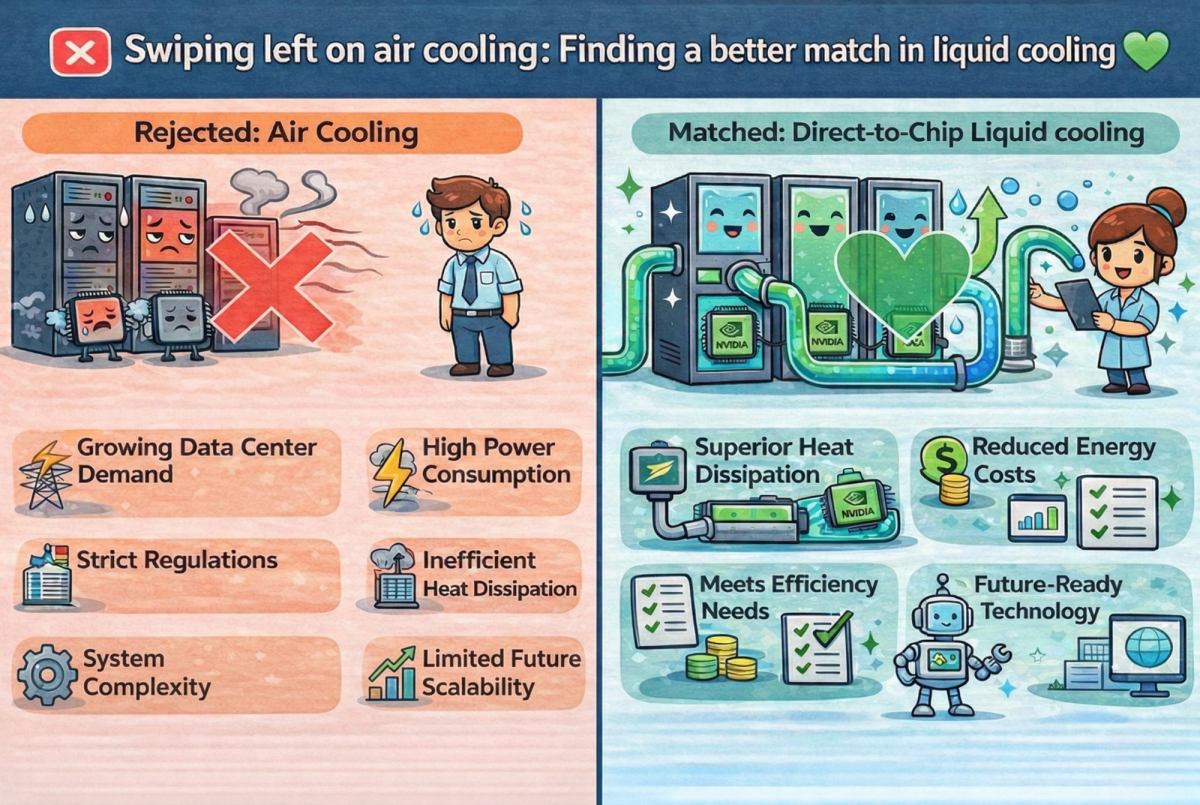
The move away from traditional heating, ventilation, and air conditioning (HVAC) systems is not a temporary trend. It is driven by grid constraints, uncompromising efficiency mandates, and the absolute laws of thermodynamics. Here are the hard metrics making liquid cooling the default architecture for high-density AI infrastructure.
Market drivers
Growing data center demand
The rapid adoption of generative artificial intelligence (AI) and large language models (LLMs) is fundamentally rewriting global power requirements and placing massive strain on local electrical grids. According to the International Energy Agency (IEA), global data center power usage sat at roughly 460 terawatt-hours (TWh) in 2022. To put that number into perspective, 460 TWh is roughly equivalent to the entire annual electricity consumption of France.
Driven largely by the voracious energy appetite of AI, that consumption is projected to reach between 620 and 1,050 TWh by 2026. Visualizing the upper end of that projection reveals the sheer scale of this challenge:
- It is equivalent to the entire electricity consumption of Japan.
- It is equal to over one-third of the total electricity generated by all the nuclear power plants in the world combined.
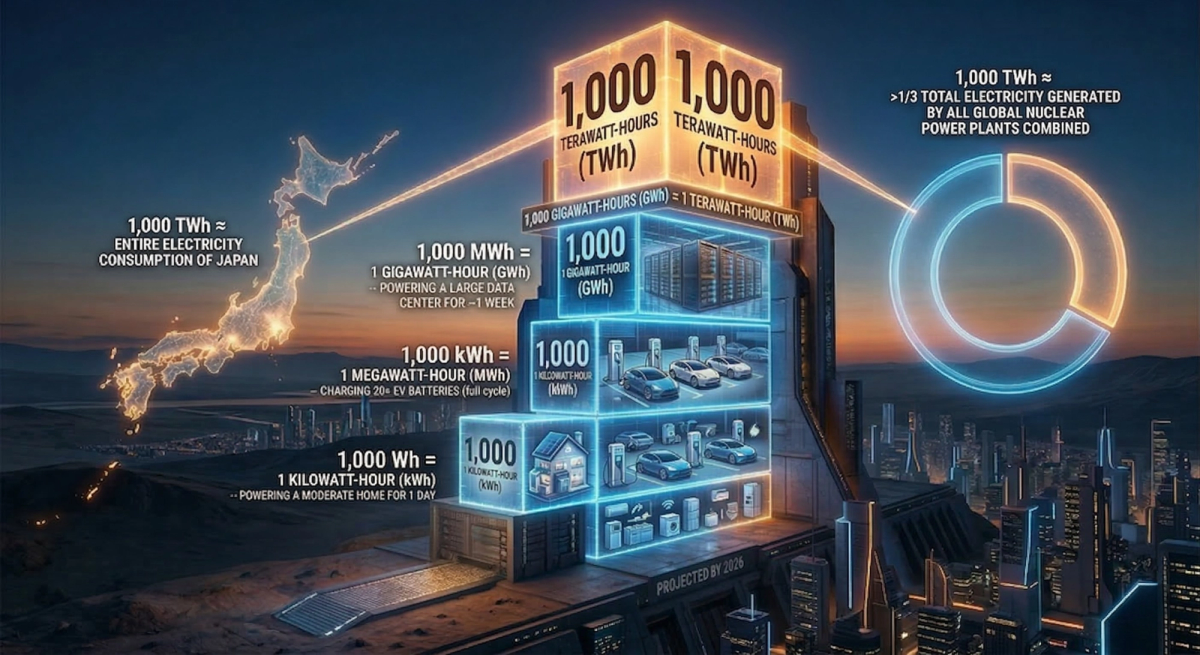
This staggering demand level is forcing operators to find drastically more efficient ways to manage power overhead.
Energy consumption concerns
This grid-level energy surge is directly tied to the power requirements of modern hardware footprints. While legacy enterprise racks average 10 to 15 kilowatts (kW), modern AI clusters operate on an entirely different scale. For example, a single NVIDIA Blackwell B200 graphics processing unit (GPU) can draw over 1,000 watts. When deployed in cutting-edge rack-scale systems like the GB200 NVL72, these configurations draw an astounding 120 kW of power per footprint, serving as a leading-edge example of future deployments.
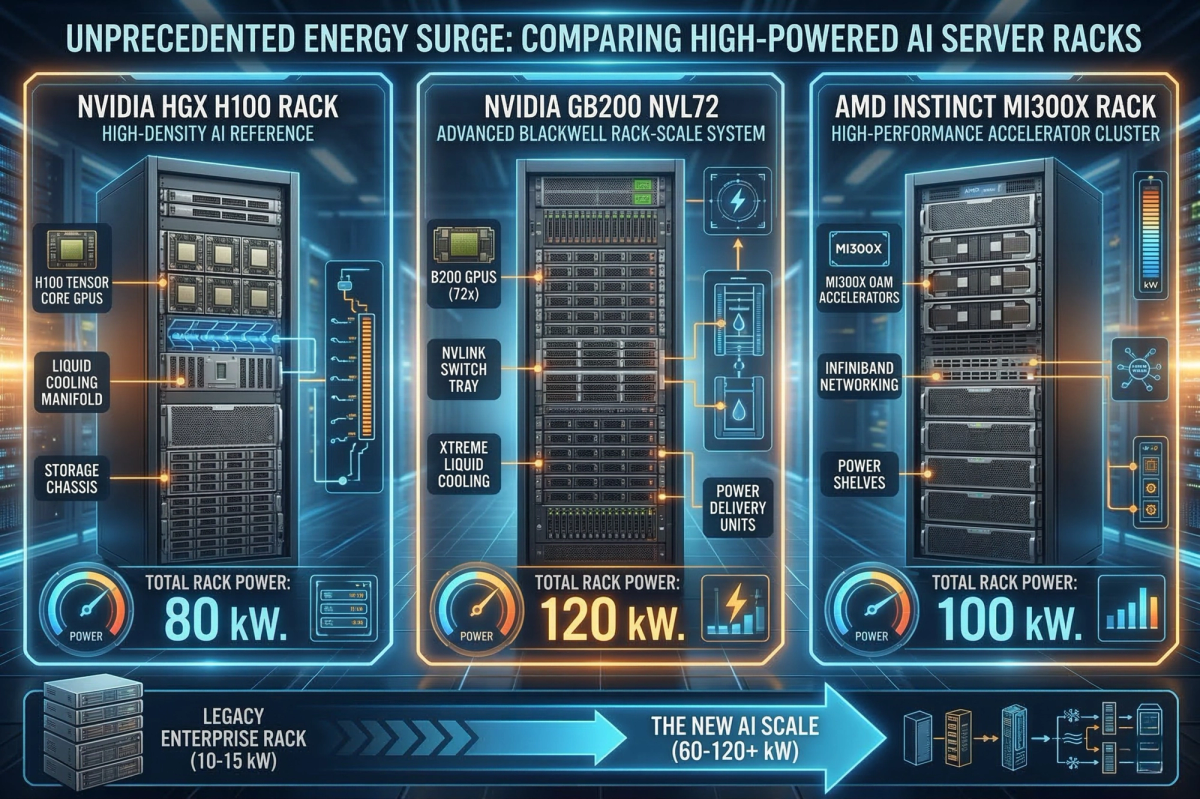
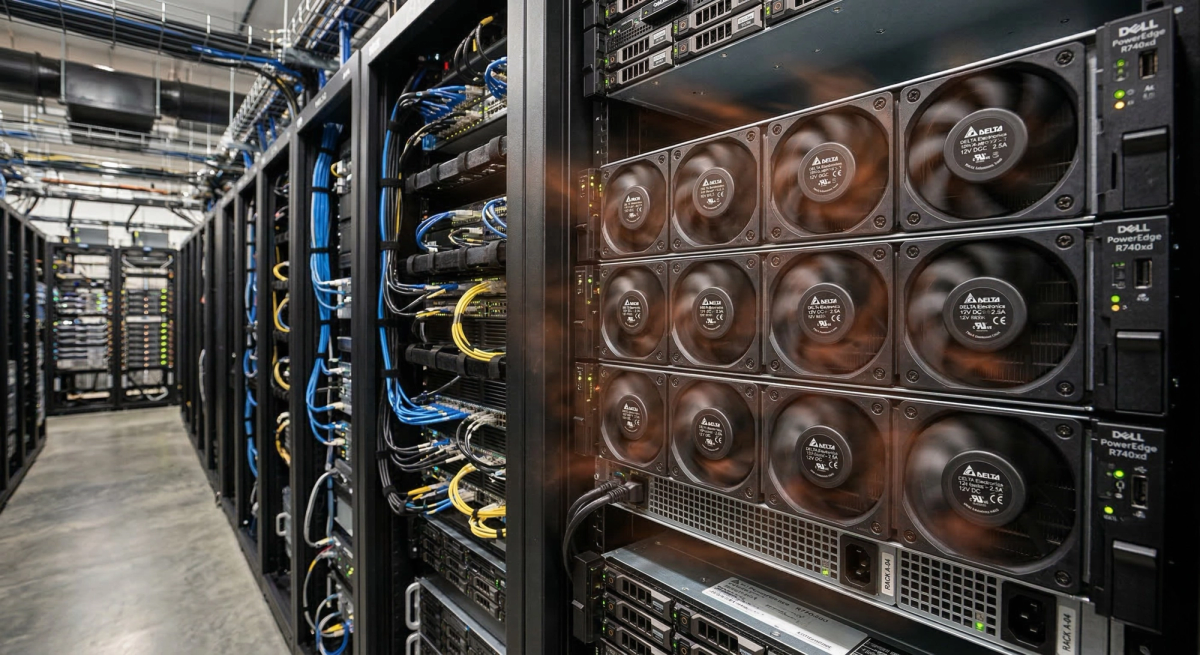
To picture this thermal density, trying to air-cool a 120 kW rack is like watching a fire-breathing dragon eat spicy hot wings inside a sauna, and trying to cool it down by gently waving a tiny paper cocktail fan. You aren’t solving the heat problem; you’re just powering a highly expensive convection oven. While forced air systems can theoretically be pushed to handle 40 to 60 kW per rack with extreme engineering, they become highly inefficient, expensive, and impractical well below those physical limits.

Because forced air systems reach their economic and physical limits well below these thresholds, transitioning to liquid cooling is becoming a primary structural imperative for advanced deployments.
The industry is rapidly standardizing around clear thermal thresholds:
- ~30 kW per rack: Hybrid cooling solutions are often required.
- ~50+ kW per rack: Liquid cooling becomes strongly preferred.
- ~100+ kW per rack: Liquid cooling is functionally mandatory.
In these hyper-dense configurations, advanced architecture allows between 60% and 85% of the thermal load to be captured directly by the liquid, drastically reducing traditional airflow requirements.
Regulatory pressures
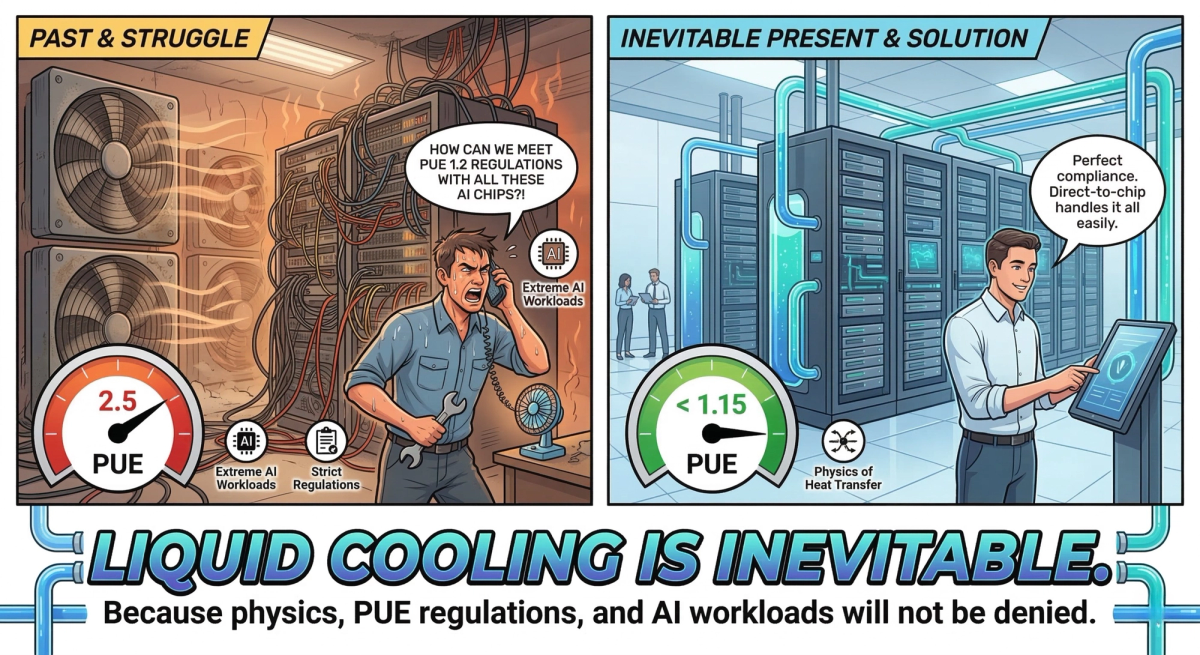
Governments are aggressively tightening regulations on infrastructure efficiency, shifting sustainability from a corporate goal to a legal requirement. Germany's Energy Efficiency Act (EnEfG) sets a strict legislative baseline, applying phased rules to both new and existing large data centers. Facilities commencing operations from July 1, 2026, are mandated to achieve a Power Usage Effectiveness (PUE) of less than 1.2, alongside an Energy Reuse Factor (ERF) of at least 10%.

Meanwhile, the US relies on a rapidly evolving patchwork of state laws and federal mandates. Federally, the Data Center Optimization Initiative (DCOI) strictly requires government agencies to consolidate infrastructure and achieve stringent PUE targets. State-level legislation, like Colorado’s SB 25-280 and Minnesota’s HF 16, directly ties lucrative tax exemptions and critical water use permits to a facility's proven energy efficiency.
In the US, hitting these ultra-low PUE metrics is increasingly tied to incentives, permits, and cost structures. Furthermore, operators must now carefully balance energy efficiency with strict water consumption regulations, which is a growing compliance hurdle for liquid-intensive facilities.
According to the Uptime Institute, the global average PUE currently sits stagnant at around 1.58. Operators relying exclusively on legacy air cooling will soon face severe compliance and operational friction if they cannot optimize their infrastructure.
Efficiency needs
Superior heat dissipation
Ultimately, the shift to liquid cooling is dictated by the laws of thermodynamics. Liquid is fundamentally superior to air at capturing and moving heat. By volume, water has a specific heat capacity approximately 3,500 times greater than air (roughly 4.18 J/cm³·K for water versus 0.0012 J/cm³·K for air).
Furthermore, its thermal conductivity is approximately 20 to 25 times higher. This physical reality allows liquid loops to capture and remove massive amounts of thermal energy from dense microprocessors almost instantaneously.
Reduced energy costs
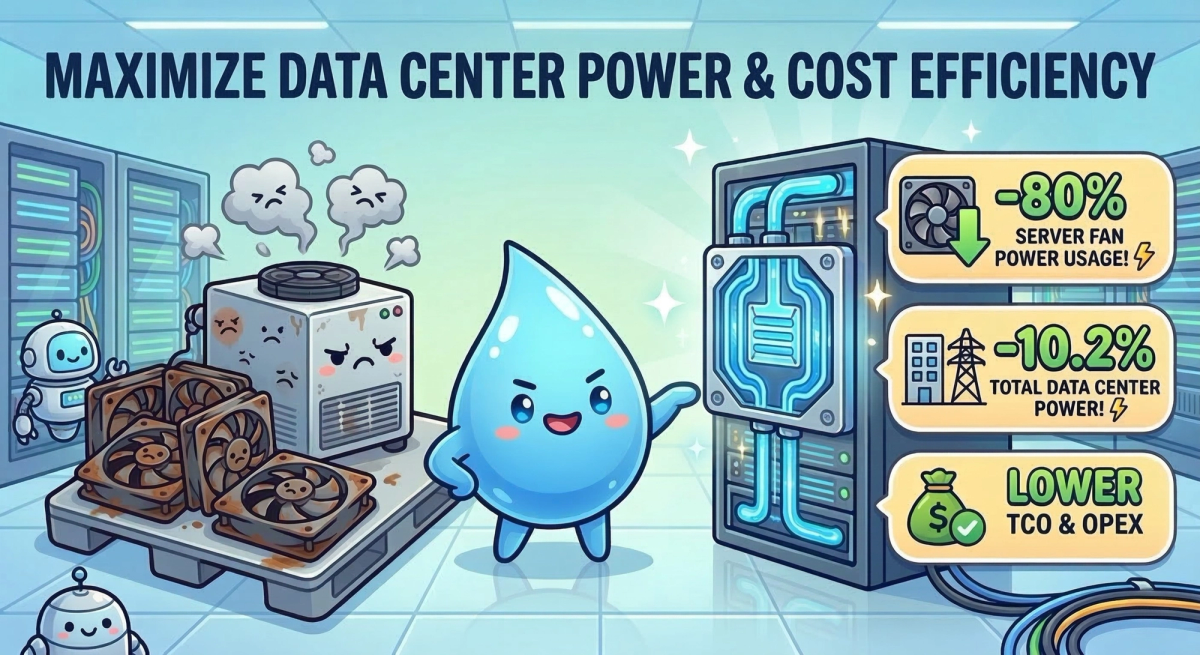
Transitioning to liquid cooling undeniably requires a higher upfront capital expenditure (CapEx) to install specialized plumbing, fluid distribution networks, and manifolds. However, by reducing the reliance on massive chiller plants and power-hungry server fans, liquid cooling significantly lowers total operating expenses (OPEX).
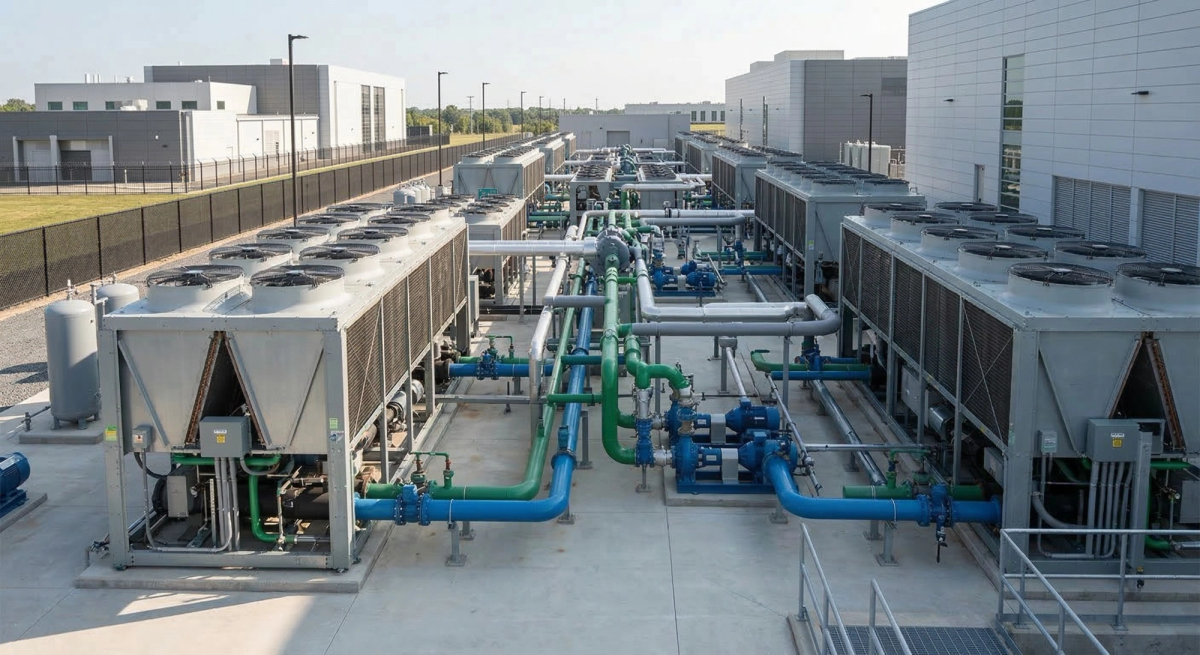
A comprehensive analysis published by the American Society of Mechanical Engineers (ASME) and Vertiv demonstrated that transitioning a facility from 100% air cooling to a 75% direct-to-chip liquid cooling model slashes server fan power usage by roughly 80%.
Overall, this optimized implementation yielded a case-specific but representative 10.2% reduction in total data center power consumption, providing a strong long-term return on investment.
Technology trends
Innovation in cooling technologies
As compute components test the physical limits of thermal thresholds, the hardware ecosystem has evolved to support continuous, peak performance.
Rear Door Heat Exchangers (RDHx) continue to serve as a vital bridge technology. Operating essentially like a large, liquid-filled radiator attached to the back of a server rack, an RDHx cools hot exhaust air before it enters the room, allowing operators to support heavier workloads without entirely gutting their air-cooled infrastructure.
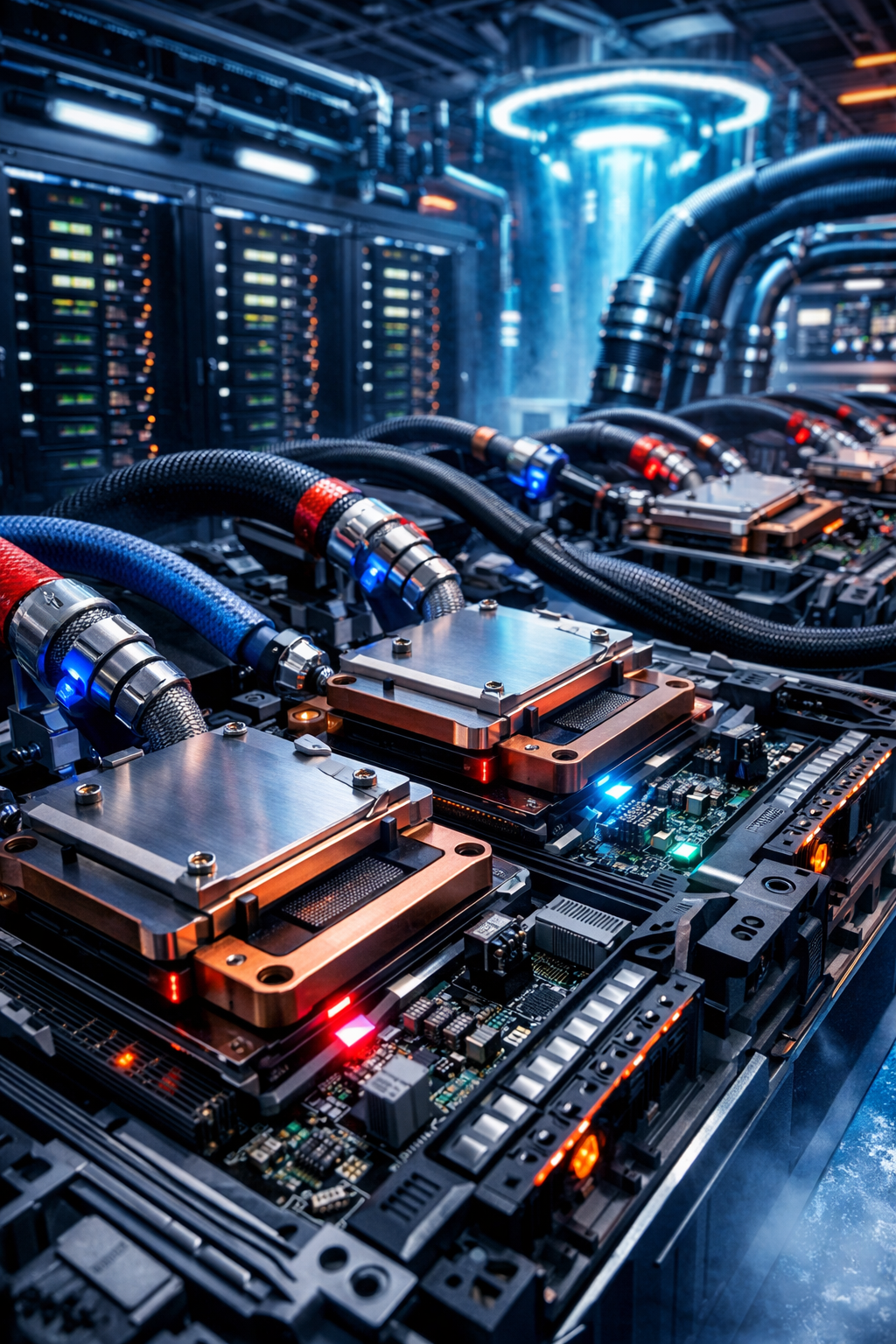
However, for ultra-high kW environments, direct-to-chip (D2C) cold plates and immersion cooling (where servers are fully submerged in non-conductive dielectric fluid) are rapidly becoming the baseline, preventing the thermal throttling that degrades AI training times and maximizing silicon lifespans.
Integration with smart systems
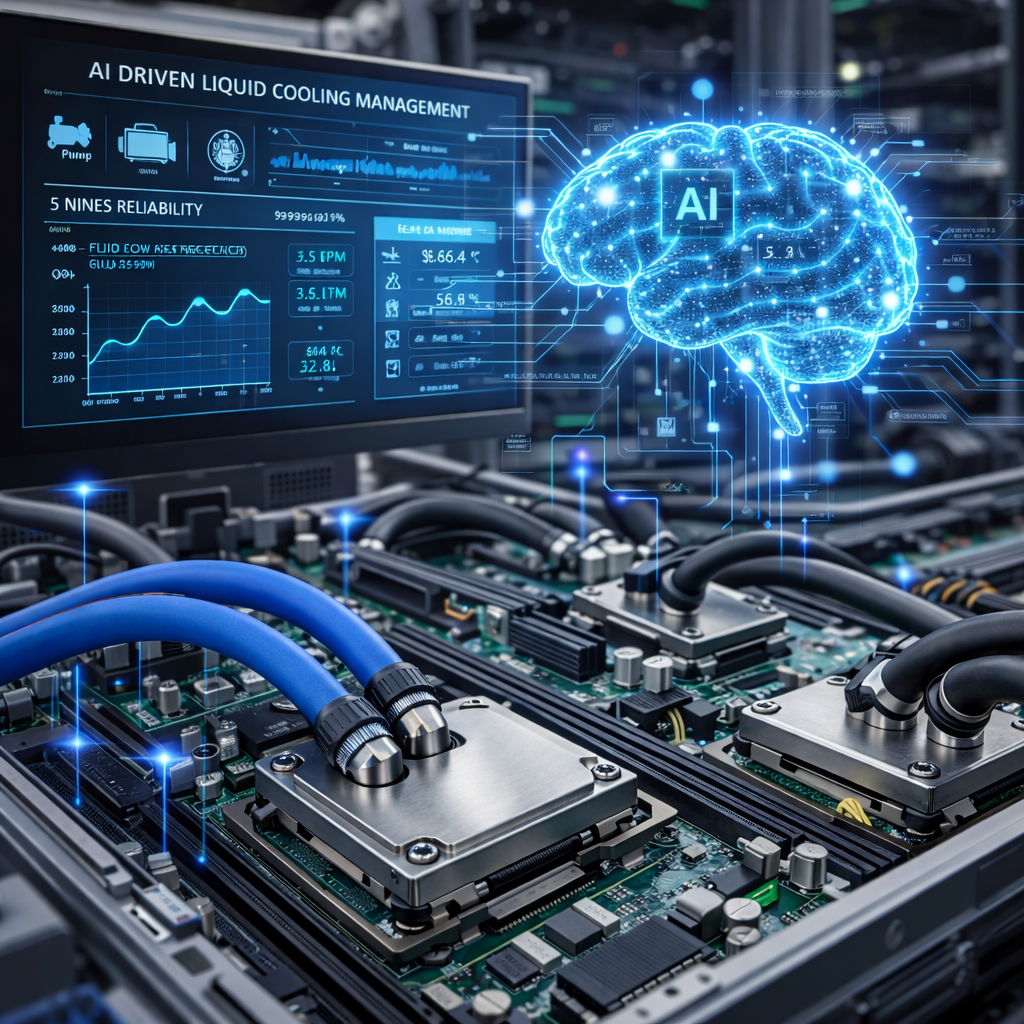
Next-generation cooling systems integrate tightly with AI-driven Data Center Infrastructure Management (DCIM) platforms. By pairing closed-loop liquid systems with real-time data and dynamic flow adjustments, operators transform passive pipes into highly responsive, automated thermal networks capable of approaching hyperscale reliability standards while mitigating risks like leaks or maintenance downtime.
Securing future-ready infrastructure
Extreme AI workloads, strict environmental regulations, and the inescapable physics of heat transfer converge to make liquid cooling the definitive architecture for high-density compute. To guarantee long-term operational viability, infrastructure architects must design for fluid-based systems today.
Subscribe to updates
Get the latest engineering perspectives sent straight to your inbox.
References
- IEA: Electricity 2024 Report
- IEA: Energy and AI Report
- Vertiv and ASME: Quantifying Data Center PUE When Introducing Liquid Cooling
- Vertiv: How rear door heat exchangers (RDHx) support high-density rack cooling
- Uptime Institute: Annual Global Data Center Survey
- Colorado General Assembly: SB 25-280 (Data Center Development and Grid Modernization Act)
- Minnesota Legislature: HF 16 (Data Center Regulatory and Water Appropriation Bill)