pH, conductivity, turbidity, particles, inhibitor health, corrosion indicators, service events, and loop context.
Coolant Health Monitoring
Coolant health
Coolant Health Monitoring for Liquid-Cooled AI Infrastructure
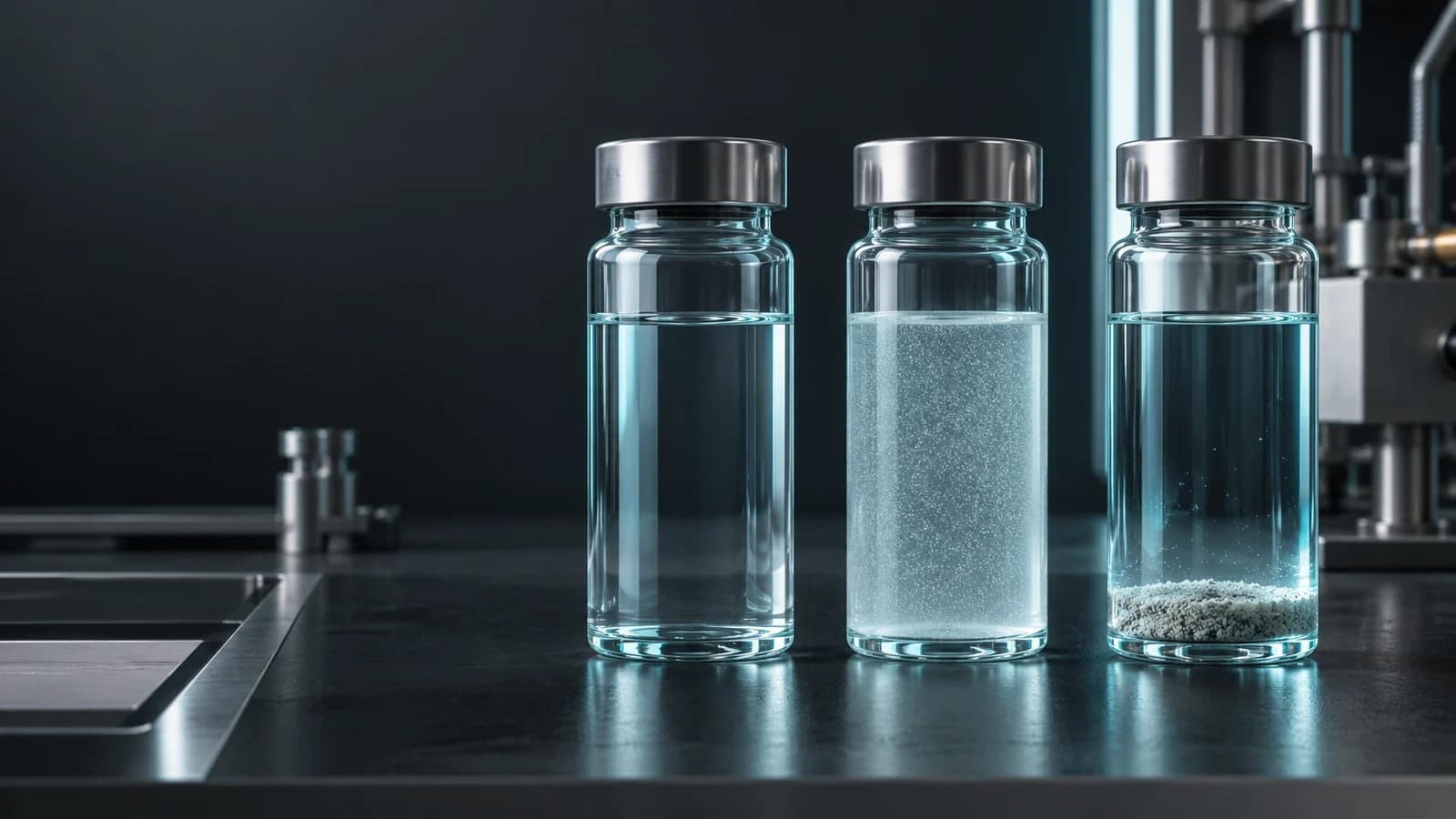
Coolant health monitoring turns fluid condition into an operating signal for liquid-cooled AI infrastructure.
Reliability Engine treats coolant as an early reliability indicator, not a late lab report after symptoms appear.
Fluid movement often appears before temperature alarms. Chemistry and particles can reveal the conditions that later become fouling, corrosion, deposits, or filter loading.
A trend tells the team whether to sample, inspect, condition, filter, rebalance, or keep watching a specific loop.
Explore the signal flow
ChemistryTrack whether the coolant remains inside the protective operating window.
ParticlesWatch contamination, debris, and material movement before restriction grows.
ContextRead chemistry beside flow, pressure, thermal response, and maintenance history.
ActionTurn fluid drift into a clear inspection or conditioning plan.
How Reliability Engine works
From cooling measurements to maintenance decisions.
Monitor the loop
Track coolant health, temperature, pressure and flow.
Compare with GPU load
Read loop changes alongside rack and GPU signals.
Check likely causes
Look for coolant changes, restrictions or workload effects.
Choose the next check
Prioritize sampling, inspection or maintenance.
What this helps you see
Chemistry
Track whether the coolant remains inside the protective operating window.
Particles
Watch contamination, debris, and material movement before restriction grows.
Context
Read chemistry beside flow, pressure, thermal response, and maintenance history.
Action
Turn fluid drift into a clear inspection or conditioning plan.
Coolant health signalsView table
| Signal | What it reveals | Risk | Operator move |
|---|---|---|---|
| pH movement | Coolant chemistry is moving away from the clean operating window. | Corrosion, inhibitor stress, or materials compatibility risk. | Review chemistry trend and compare against service history. |
| Particles | Wear, debris, biological material, or contamination entering the loop. | Cold-plate fouling, filter loading, and flow restriction. | Inspect filters and identify whether particles are rising or stabilizing. |
| Turbidity | Suspended matter or instability in the fluid. | Reduced heat transfer and hidden fouling risk. | Check filtration, sampling, and recent maintenance events. |
| Inhibitor health | Whether the coolant still has protective chemistry reserve. | Accelerated corrosion or deposit formation. | Plan conditioning, replacement, or deeper fluid analysis. |
pH movement
- What it reveals
- Coolant chemistry is moving away from the clean operating window.
- Risk
- Corrosion, inhibitor stress, or materials compatibility risk.
- Operator move
- Review chemistry trend and compare against service history.
Particles
- What it reveals
- Wear, debris, biological material, or contamination entering the loop.
- Risk
- Cold-plate fouling, filter loading, and flow restriction.
- Operator move
- Inspect filters and identify whether particles are rising or stabilizing.
Turbidity
- What it reveals
- Suspended matter or instability in the fluid.
- Risk
- Reduced heat transfer and hidden fouling risk.
- Operator move
- Check filtration, sampling, and recent maintenance events.
Inhibitor health
- What it reveals
- Whether the coolant still has protective chemistry reserve.
- Risk
- Accelerated corrosion or deposit formation.
- Operator move
- Plan conditioning, replacement, or deeper fluid analysis.
From the library
Engineering guides
Coolant Monitoring, Maintenance and Troubleshooting
Build a practical coolant monitoring program for direct-to-chip cooling, with sampling, hydraulic checks, maintenance decisions and incident evidence.
Read guideCoolant Chemistry and Filtration for Liquid CoolingSelect, test and maintain liquid cooling coolant with a practical guide to chemistry, material compatibility, filtration, sampling and corrective action.
Read guideCommon questions
What is coolant health monitoring?
Coolant health monitoring is the continuous or routine tracking of fluid chemistry, particles, contamination, inhibitor condition, and loop context to understand whether the cooling fluid remains reliable.
Which coolant health signals matter most?
Useful signals include pH, conductivity, turbidity, particle load, inhibitor health, corrosion indicators, filter loading, temperature delta, pressure behavior, and recent maintenance events.
How does coolant health affect GPU reliability?
Coolant condition can influence fouling, corrosion, heat transfer, pressure drop, and flow distribution. Those changes can reduce thermal margin and useful GPU output.