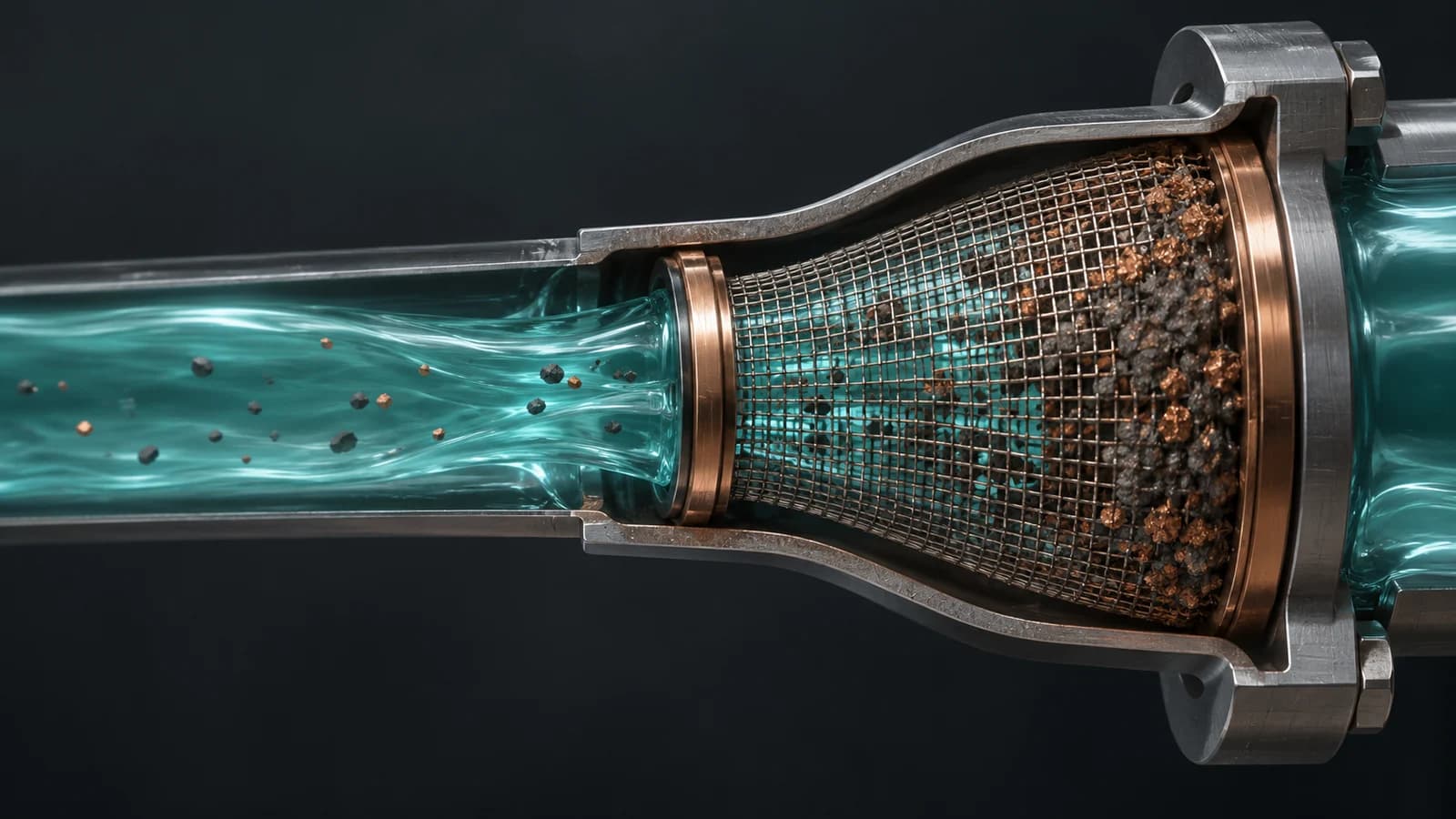
Fluid chemistry, particles, pressure drop, filter loading, and heat-transfer response can move before alarms fire.
Coolant Failure Prediction
Failure prediction
Coolant Failure Prediction for Liquid-Cooled Data Centers
Coolant failure prediction is about finding the risk window before visible failure, corrosion, fouling, throttling, or downtime.
Reliability Engine looks for patterns across fluid health, hydraulic behavior, thermal response, and service history so operators can act while there is still margin.
Prediction earns trust when it points to a review, sample, inspection, or maintenance decision. Vague risk scores are not enough.
Confidence improves when coolant, flow, pressure, and workload signals all point to the same direction of drift.
Explore the signal flow
Risk windowFind early drift before margin disappears.
Root signalSeparate coolant-driven risk from workload or sensor noise.
Action timingMove inspection and maintenance earlier.
VerificationConfirm whether the action moved the loop back toward baseline.
How Reliability Engine works
From cooling measurements to maintenance decisions.
Monitor the loop
Track coolant health, temperature, pressure and flow.
Compare with GPU load
Read loop changes alongside rack and GPU signals.
Check likely causes
Look for coolant changes, restrictions or workload effects.
Choose the next check
Prioritize sampling, inspection or maintenance.
What this helps you see
Risk window
Find early drift before margin disappears.
Root signal
Separate coolant-driven risk from workload or sensor noise.
Action timing
Move inspection and maintenance earlier.
Verification
Confirm whether the action moved the loop back toward baseline.
Early failure patternsView table
| Pattern | What it may reveal | Risk | Operator move |
|---|---|---|---|
| Conductivity and turbidity rising together | Fluid contamination or degradation. | Corrosion, deposits, or filtration stress. | Review coolant sample and recent loop events. |
| Pressure drop increasing over time | Restriction, filter loading, or fouling. | Uneven flow and lost thermal margin. | Inspect filter, manifold, and cold-plate paths. |
| Temperature delta drifting at stable workload | Heat transfer is changing. | GPU throttling or reduced boost window. | Compare against coolant and flow trends. |
| Repeated recovery after cleaning | Maintenance action temporarily improves the loop. | Recurring underlying source remains. | Identify source of contamination or imbalance. |
Conductivity and turbidity rising together
- What it may reveal
- Fluid contamination or degradation.
- Risk
- Corrosion, deposits, or filtration stress.
- Operator move
- Review coolant sample and recent loop events.
Pressure drop increasing over time
- What it may reveal
- Restriction, filter loading, or fouling.
- Risk
- Uneven flow and lost thermal margin.
- Operator move
- Inspect filter, manifold, and cold-plate paths.
Temperature delta drifting at stable workload
- What it may reveal
- Heat transfer is changing.
- Risk
- GPU throttling or reduced boost window.
- Operator move
- Compare against coolant and flow trends.
Repeated recovery after cleaning
- What it may reveal
- Maintenance action temporarily improves the loop.
- Risk
- Recurring underlying source remains.
- Operator move
- Identify source of contamination or imbalance.
From the library
Engineering guides
Coolant Monitoring, Maintenance and Troubleshooting
Build a practical coolant monitoring program for direct-to-chip cooling, with sampling, hydraulic checks, maintenance decisions and incident evidence.
Read guideLiquid Cooling Reliability for GPU and HPC ClustersInvestigate liquid cooling reliability in GPU and HPC clusters by connecting NVIDIA telemetry, workload context, coolant condition and hydraulic evidence.
Read guideCommon questions
What is coolant failure prediction?
Coolant failure prediction uses chemistry, particle, hydraulic, thermal, and service-history signals to identify conditions that may lead to fouling, corrosion, restriction, or lost thermal margin.
Can coolant problems be found before temperature alarms?
Often yes. Changes in chemistry, turbidity, particles, pressure drop, and filter loading can appear before the GPU temperature symptom becomes obvious.
What happens after a prediction?
The team knows whether to sample, inspect, review filters, balance a branch, condition coolant, clean a path, or protect workload output.