Chemistry can reveal contamination, degradation, inhibitor depletion, corrosion risk, and materials compatibility movement before visible symptoms.
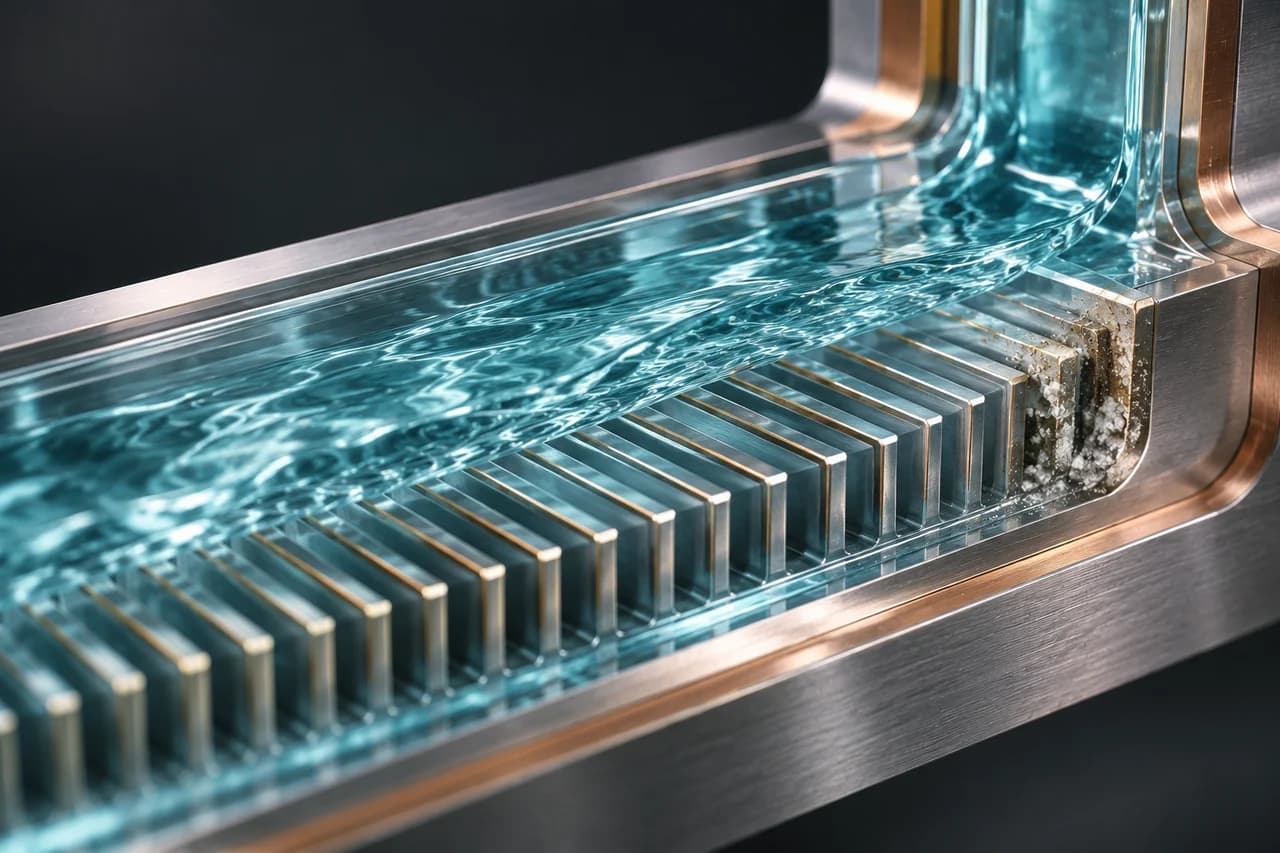
Coolant Chemistry Monitoring
Chemistry
Coolant Chemistry Monitoring for Direct-to-Chip Liquid Cooling
Coolant chemistry monitoring helps teams understand whether the fluid is still protecting the loop or beginning to create reliability risk.
Reliability Engine connects chemistry to loop behavior so chemistry movement can be interpreted beside pressure, flow, filtration, and thermal response.
The same chemistry movement means different things depending on workload, service history, filtration, pressure behavior, and loop materials.
The chemistry trend makes the next decision clearer: keep watching, sample, condition, clean, or review the loop more deeply.
Explore the signal flow
pHWatch movement away from the coolant operating window.
ConductivityTrack contamination or ionic movement in the loop.
InhibitorsUnderstand whether protective chemistry is still available.
Particles and turbidityConnect chemistry movement to physical contamination and fouling risk.
How Reliability Engine works
From cooling measurements to maintenance decisions.
Monitor the loop
Track coolant health, temperature, pressure and flow.
Compare with GPU load
Read loop changes alongside rack and GPU signals.
Check likely causes
Look for coolant changes, restrictions or workload effects.
Choose the next check
Prioritize sampling, inspection or maintenance.
What this helps you see
pH
Watch movement away from the coolant operating window.
Conductivity
Track contamination or ionic movement in the loop.
Inhibitors
Understand whether protective chemistry is still available.
Particles and turbidity
Connect chemistry movement to physical contamination and fouling risk.
Coolant health signalsView table
| Signal | What it reveals | Risk | Operator move |
|---|---|---|---|
| pH movement | Coolant chemistry is moving away from the clean operating window. | Corrosion, inhibitor stress, or materials compatibility risk. | Review chemistry trend and compare against service history. |
| Particles | Wear, debris, biological material, or contamination entering the loop. | Cold-plate fouling, filter loading, and flow restriction. | Inspect filters and identify whether particles are rising or stabilizing. |
| Turbidity | Suspended matter or instability in the fluid. | Reduced heat transfer and hidden fouling risk. | Check filtration, sampling, and recent maintenance events. |
| Inhibitor health | Whether the coolant still has protective chemistry reserve. | Accelerated corrosion or deposit formation. | Plan conditioning, replacement, or deeper fluid analysis. |
pH movement
- What it reveals
- Coolant chemistry is moving away from the clean operating window.
- Risk
- Corrosion, inhibitor stress, or materials compatibility risk.
- Operator move
- Review chemistry trend and compare against service history.
Particles
- What it reveals
- Wear, debris, biological material, or contamination entering the loop.
- Risk
- Cold-plate fouling, filter loading, and flow restriction.
- Operator move
- Inspect filters and identify whether particles are rising or stabilizing.
Turbidity
- What it reveals
- Suspended matter or instability in the fluid.
- Risk
- Reduced heat transfer and hidden fouling risk.
- Operator move
- Check filtration, sampling, and recent maintenance events.
Inhibitor health
- What it reveals
- Whether the coolant still has protective chemistry reserve.
- Risk
- Accelerated corrosion or deposit formation.
- Operator move
- Plan conditioning, replacement, or deeper fluid analysis.
From the library
Engineering guides
Coolant Chemistry and Filtration for Liquid Cooling
Select, test and maintain liquid cooling coolant with a practical guide to chemistry, material compatibility, filtration, sampling and corrective action.
Read guideCoolant Monitoring, Maintenance and TroubleshootingBuild a practical coolant monitoring program for direct-to-chip cooling, with sampling, hydraulic checks, maintenance decisions and incident evidence.
Read guideCommon questions
Why monitor coolant chemistry in direct-to-chip systems?
Chemistry affects corrosion protection, materials compatibility, deposits, particles, and the long-term stability of the cooling loop.
Which chemistry signals are useful?
Useful signals include pH, conductivity, inhibitor health, turbidity, particles, corrosion indicators, oxidation or degradation signs, and service-event context.
How does chemistry data become useful?
Chemistry data becomes useful when it is read beside pressure, flow, temperature, filter behavior, workload, and service history.