Cold plates, branch paths, filters, manifolds, and coolant chemistry can all affect the same GPU thermal symptom.
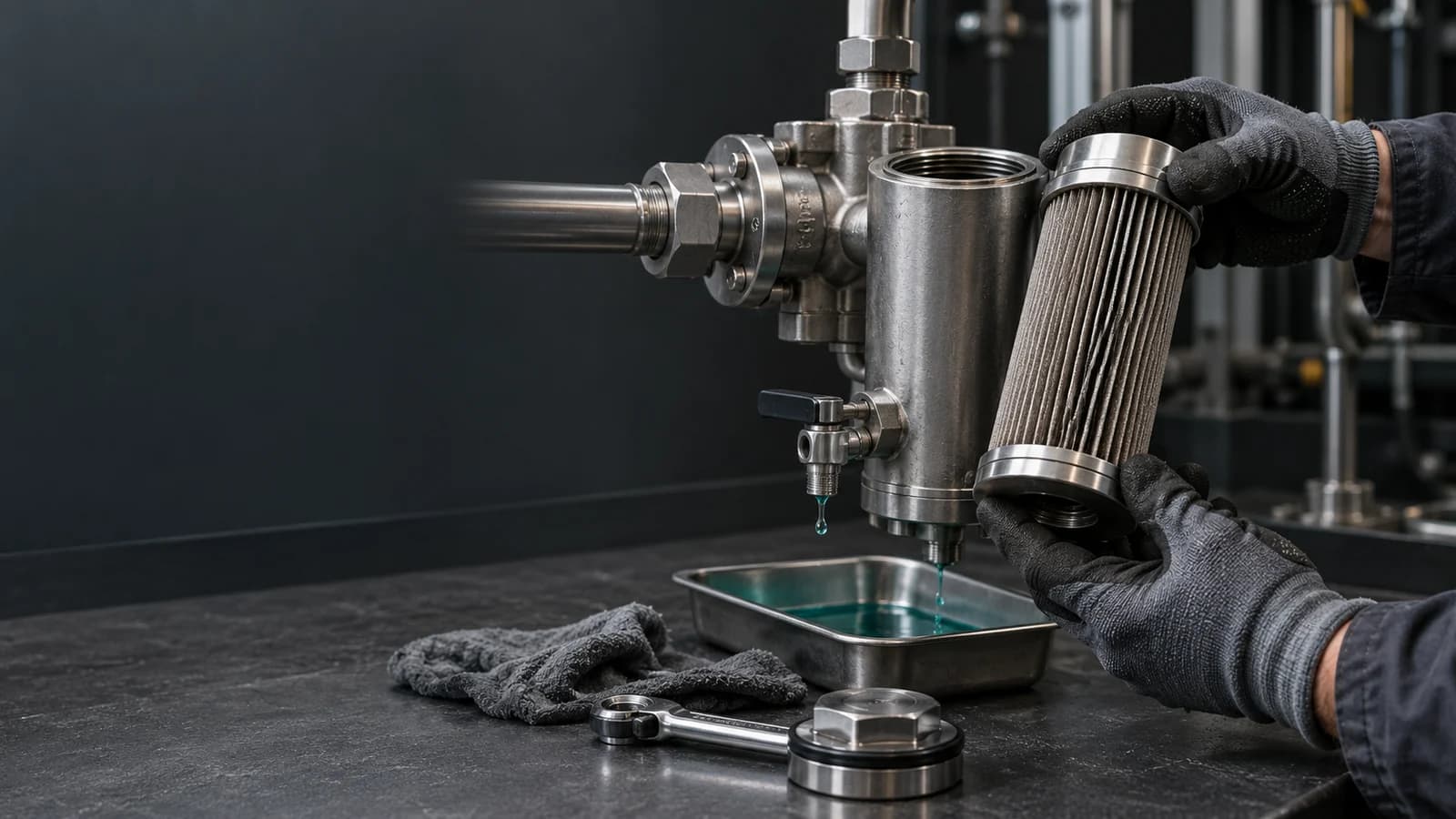
Direct-to-Chip Cooling Maintenance
Maintenance
Direct-to-Chip Cooling Maintenance for GPU Data Centers
Direct-to-chip cooling maintenance is strongest when service decisions are based on loop behavior, not only calendar intervals or late-stage alarms.
Reliability Engine helps operators decide when to inspect, sample, rebalance, clean, condition, or protect output based on connected signals.
A useful maintenance layer watches pressure drop, flow variance, thermal drift, filter behavior, coolant health, and recent interventions.
Good maintenance confirms whether the action improved the loop, then updates the baseline only after proof.
Explore the signal flow
InspectPrioritize the branch, filter, manifold, or cold plate showing abnormal drift.
SampleUse coolant health data to confirm or rule out fluid-driven risk.
RebalanceAddress uneven distribution before one tray becomes the limiting path.
VerifyConfirm that the loop returned toward the clean operating signature.
How Reliability Engine works
From cooling measurements to maintenance decisions.
Monitor the loop
Track coolant health, temperature, pressure and flow.
Compare with GPU load
Read loop changes alongside rack and GPU signals.
Check likely causes
Look for coolant changes, restrictions or workload effects.
Choose the next check
Prioritize sampling, inspection or maintenance.
What this helps you see
Inspect
Prioritize the branch, filter, manifold, or cold plate showing abnormal drift.
Sample
Use coolant health data to confirm or rule out fluid-driven risk.
Rebalance
Address uneven distribution before one tray becomes the limiting path.
Verify
Confirm that the loop returned toward the clean operating signature.
Maintenance decisions to make earlierView table
| Condition | What it suggests | Risk | Operator move |
|---|---|---|---|
| Filter loading plus pressure drift | The loop is becoming harder to move through. | Pump stress and uneven branch flow. | Inspect or replace filters before thermal alarms appear. |
| Thermal drift with stable workload | Heat transfer may be degrading. | Lost GPU margin and reduced boost windows. | Check cold plates, coolant, and branch balance. |
| Chemistry movement after service | New fluid, flushing, or material exposure changed the loop. | Shortened coolant life or corrosion risk. | Re-baseline after the maintenance event. |
| Repeated branch imbalance | A recurring hydraulic pattern is present. | One rack or tray becomes the weak point. | Prioritize the branch for inspection and balancing. |
Filter loading plus pressure drift
- What it suggests
- The loop is becoming harder to move through.
- Risk
- Pump stress and uneven branch flow.
- Operator move
- Inspect or replace filters before thermal alarms appear.
Thermal drift with stable workload
- What it suggests
- Heat transfer may be degrading.
- Risk
- Lost GPU margin and reduced boost windows.
- Operator move
- Check cold plates, coolant, and branch balance.
Chemistry movement after service
- What it suggests
- New fluid, flushing, or material exposure changed the loop.
- Risk
- Shortened coolant life or corrosion risk.
- Operator move
- Re-baseline after the maintenance event.
Repeated branch imbalance
- What it suggests
- A recurring hydraulic pattern is present.
- Risk
- One rack or tray becomes the weak point.
- Operator move
- Prioritize the branch for inspection and balancing.
From the library
Engineering guides
Coolant Monitoring, Maintenance and Troubleshooting
Build a practical coolant monitoring program for direct-to-chip cooling, with sampling, hydraulic checks, maintenance decisions and incident evidence.
Read guideLiquid Cooling Commissioning and Clean Loop ReadinessCommission liquid cooling with staged clean-loop acceptance, approved flushing methods, fluid verification, performance tests and an evidence-based handover.
Read guideCommon questions
How do teams prioritize direct-to-chip cooling maintenance?
The strongest signal usually comes from patterns across pressure, flow, temperature response, coolant health, filter behavior, and workload context.
What direct-to-chip signals point to maintenance needs?
Pressure drop, flow imbalance, filter loading, thermal response drift, particle load, chemistry movement, and repeated branch instability can all point to maintenance needs.
Why verify after maintenance?
Verification shows whether the action actually improved the loop. Without verification, teams may update baselines around an unresolved problem.